
Clavija ornata
Clavija ornata
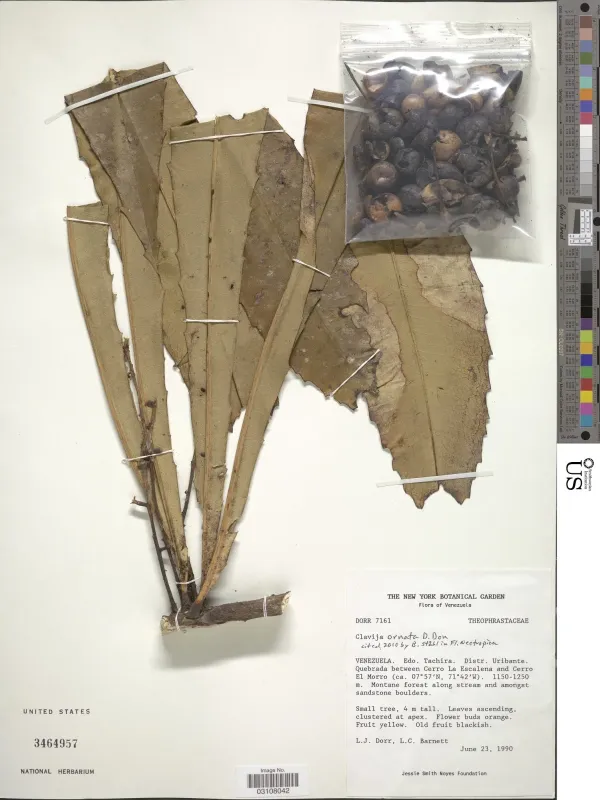
Description
Growing requirements
Clavija ornata is a distinctive evergreen shrub belonging to the Primulaceae family, naturally occurring in the tropical rainforests of South America. It is widely recognized for its robust, glossy leaves arranged in terminal rosettes, which give the plant a striking architectural appearance.
The plant requires a strictly tropical climate to thrive, specifically demanding consistent temperatures between 20°C and 26°C throughout the year. It is highly sensitive to cold drafts and sudden thermal fluctuations, which makes controlled greenhouse environments the only viable option for its cultivation.
Regarding soil requirements, the culture prefers a fertile, well-draining, and slightly acidic medium. A mixture of peat, leaf mold, and perlite provides the necessary structure to support healthy root development while ensuring that the root system remains sufficiently oxygenated.
Maintenance involves diligent watering practices, as the plant demands constant moisture in the soil without becoming waterlogged. High ambient humidity is essential for leaf health, often requiring regular misting or the use of automated humidification systems in large-scale nursery operations.
As an ornamental crop, Clavija ornata is primarily used in botanical collections and high-end indoor landscaping. Its propagation is traditionally achieved through seeds or stem cuttings, although the latter requires precise hormonal treatment to ensure successful rooting in a humid, propagation-friendly climate.
Main diseases and pests
Common pests affecting Clavija ornata in greenhouse settings include spider mites and scale insects. These pests thrive in dry environments, making constant humidity monitoring the primary defense strategy for maintaining the health of the foliage throughout the growth cycle.
Root rot, often caused by overwatering or poor drainage, is the most lethal condition for this species. To mitigate this risk, growers must ensure that the potting containers have adequate holes and that the irrigation schedule is adjusted based on the light intensity and plant growth stages.
Fungal leaf spot diseases may appear if there is poor air circulation and excessive surface wetness on the foliage. Establishing effective ventilation protocols is essential to prevent the accumulation of moisture on the leaves, which acts as a catalyst for pathogen outbreaks.
Chemical control should be approached with caution, as the plant's leaves can be sensitive to specific pesticides. It is highly recommended to perform a patch test on a small leaf area before applying systemic chemicals across the entire crop population to avoid chemical burning.
Implementing a strict hygiene protocol, including the sanitation of all growing surfaces and pruning tools, is the most effective way to prevent the transmission of bacteria and viruses between individual plants in a crowded nursery environment.