
Androsace villosa
Androsace villosa
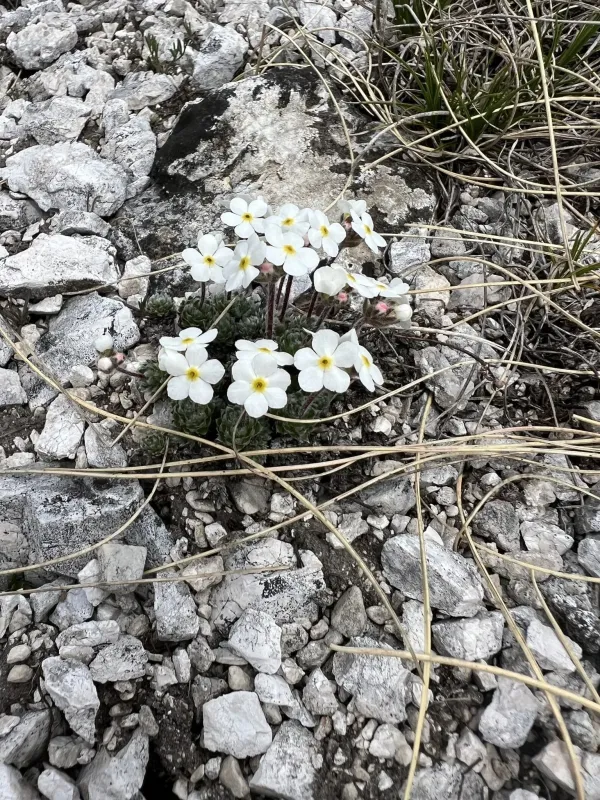
Description
Sowing dates
Androsace villosa, known as the hairy rock jasmine, is a perennial flowering plant belonging to the Primulaceae family. Propagation is primarily achieved through seeds which require a cold stratification period of at least one month to break dormancy.
The seeds are best sown in a gritty, well-draining substrate during late autumn or early winter, allowing natural outdoor temperatures to facilitate the germination process in spring.
When sowing indoors, the trays should be kept cool and provided with consistent light, as the seeds are light-dependent for successful sprouting and establishment.
Vegetative propagation is also possible by carefully dividing the mats or taking small rosettes with roots. This process is best performed in the spring, right before the start of the active growth phase.
The growth rate of this species is relatively slow, making it a perfect candidate for containers or troughs where it can form dense, long-lasting mats over time.
Growing requirements
This alpine species demands excellent drainage and is highly intolerant of waterlogged soil. It thrives in rock crevices, scree gardens, and troughs filled with mineral-rich, stony soil.
Androsace villosa requires full sun exposure to maintain its characteristic dense, cushion-like habit. Inadequate light results in etiolated growth and poor flowering performance.
The soil pH should be neutral to slightly alkaline, and the substrate should be poor in organic matter. Excessive nitrogen or compost will encourage soft growth that is prone to rot.
While the plant is drought-tolerant once established, it benefits from occasional deep watering during extreme summer heat, provided that the water is applied directly to the soil surface.
Winter protection from excessive moisture is vital. A glass pane or a cloche can be used to prevent rain and melting snow from settling on the foliage during the winter dormancy period.
Main diseases and pests
The most significant threat to Androsace villosa is crown rot, caused by stagnant water or poor air circulation around the root neck of the plant.
Slugs and snails can cause considerable damage to the foliage, especially during humid spring weather. Physical barriers or organic molluscicides are recommended for control.
In high humidity environments, fungal pathogens such as Botrytis may appear on dying leaf tissue, requiring the removal of infected parts to prevent further spread.
Pests such as aphids may sometimes attack the flower stalks during the peak of the blooming season, which can be managed with gentle, targeted applications of insecticidal soap.
Proper aeration is essential for preventing almost all common ailments; ensuring the plant is surrounded by coarse grit or stone chips helps maintain dry conditions around the foliage.