
Androsace sempervivoides
Androsace sempervivoides
Description
Sowing dates
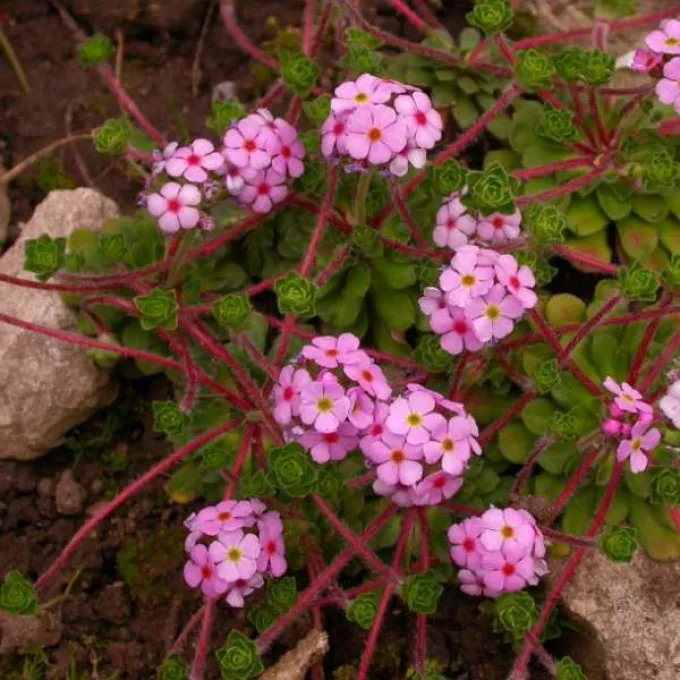
Androsace sempervivoides is an attractive alpine plant belonging to the Primulaceae family, highly valued by rock garden enthusiasts. Propagation is typically achieved through seeds or the separation of runners and rosettes during the active growth season.
Seeds should be sown in autumn or early spring, as they often require a period of cold stratification to break dormancy. Sowing in a gritty, well-draining substrate is critical for achieving high germination rates and preventing damping-off.
Vegetative propagation is highly successful because the plant produces stolons that form small, independent rosettes. These can be easily detached and rooted in a moist, sandy medium, allowing for rapid expansion of existing colonies.
When established, the plants form dense, mat-like carpets that provide excellent ground cover in rock crevices or alpine beds. Proper spacing during initial planting is necessary to ensure adequate ventilation between individual rosettes.
The best time for planting out is in the spring, once the danger of severe frost has passed and the ground has warmed sufficiently, allowing the plants to establish a firm root system before the summer heat.
Growing requirements
Originating from the Himalayan mountains, this species requires environmental conditions that mimic high-altitude habitats. It thrives in full sun but benefits from light shade during the intense heat of the afternoon in warmer climates.
The soil must be extremely well-draining, consisting of a mix of loam, sand, and stone chips. A top dressing of fine gravel around the rosettes is highly recommended to keep the foliage dry and prevent rot caused by contact with damp soil.
Watering should be managed carefully, ensuring the substrate dries out between waterings. The plants are sensitive to stagnant water, especially during winter months, where protecting them from excessive humidity is paramount for survival.
Temperature management is straightforward, as the plant is hardy and adapted to significant fluctuations. However, in regions with harsh winters and little snow cover, a light covering with pine boughs can offer necessary protection against desiccating winds.
Nutrient requirements are modest; the plant prefers a lean soil. Occasional application of a low-nitrogen, high-potassium liquid fertilizer can support healthy growth and improve overall resilience without forcing weak, succulent-like expansion.
Main diseases and pests
The primary threat to the health of Androsace sempervivoides is fungal decay due to high humidity. Proper airflow is essential, and any signs of mildew or rot should be addressed by improving drainage and removing affected parts.
Slugs and snails are major pests that can devour the succulent-like leaves during wet spring weather. Implementing physical barriers, such as copper tape or crushed eggshells, can help protect the plants from these mollusks.
Aphids can occasionally colonize the flower stalks, which may reduce the quality of the blooms. If an infestation is detected, soft-soap sprays or specific garden-safe insecticides can be used to manage the pest population effectively.
Spider mites can be problematic in dry, hot conditions, especially if the plants are situated in areas with poor ventilation. Regular monitoring and increased humidity around the plant base can deter these pests from settling.
Maintaining cleanliness by removing old, withered leaves in early spring prevents the accumulation of debris, which is a breeding ground for various pathogens and pests within the dense foliage of the plant.