
Androsace rotundifolia
Androsace rotundifolia
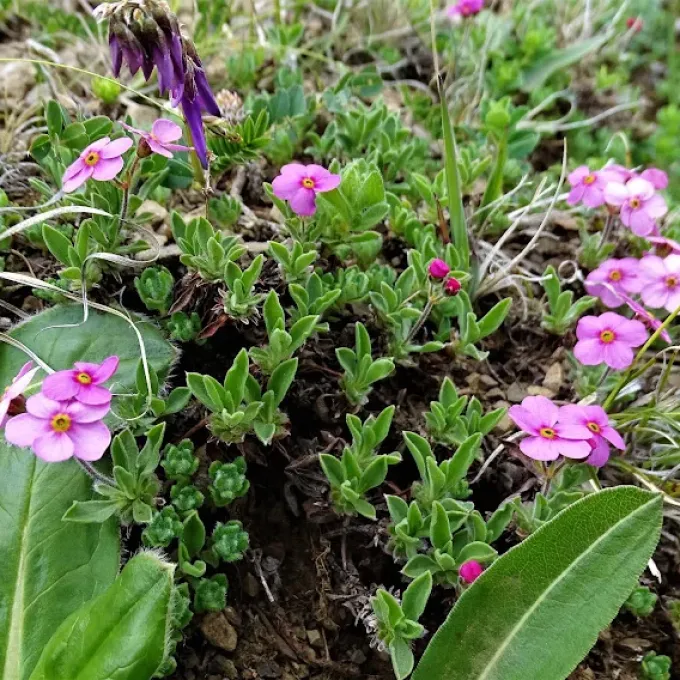
Description
Sowing dates
Androsace rotundifolia, a member of the Primulaceae family, is a delicate perennial plant primarily valued by rock garden enthusiasts for its unique rosette form.
Seeds of this species require cold stratification to break dormancy; sowing in autumn allows for natural winter exposure, which significantly increases germination rates.
For spring sowing, seeds should be placed in a refrigerator at temperatures between +2 and +4 degrees Celsius for at least six weeks before being sown in a seed tray.
The seeds are microscopic and should not be covered with soil; instead, they are scattered over a fine, moist, well-draining sowing mix and gently pressed down.
Seedlings are slow-growing and require patience; they should only be transplanted when they have developed several true leaves and a sturdy root system.
Growing requirements
Native to the Himalayas, this plant thrives in cool temperatures and requires a location that mimics its natural high-altitude environment, such as a north-facing rock garden.
The most important requirement is exceptional drainage; the soil must be gritty and porous to ensure that water never accumulates around the crown of the plant.
A mixture of standard potting soil, coarse sand, and limestone chippings is recommended to create the ideal growing medium for this alpine perennial.
While the plant enjoys sunlight, it must be protected from scorching midday sun in warmer climates to prevent the foliage from drying out or burning.
Watering must be done with extreme precision, ideally at the base of the plant, ensuring the leaves remain dry to prevent rotting and fungal issues.
Main diseases and pests
The most significant threat to Androsace rotundifolia is root rot caused by stagnant water, which is almost always fatal if left untreated for a prolonged period.
High humidity and poor air circulation around the foliage can lead to gray mold (botrytis), which spreads rapidly and can destroy the entire rosette structure.
Pests such as aphids and spider mites can attack the plants during hot spells, sucking the plant juices and leaving the leaves deformed and discolored.
Nematode infestations in the root zone can also cause stunted growth and a general decline in plant health, often requiring the removal and destruction of the affected plant.
- Ensure a layer of fine grit around the base of the plant to keep the crown dry.
- Promote good air circulation by not overcrowding the plants in the rock garden.
- Use organic insecticidal soaps at the first sign of pest colonization.