
Pyrenean rock jasmine
Androsace pyrenaica
Description
Growing requirements
The Pyrenean rock jasmine (Androsace pyrenaica) belongs to the Primulaceae family and is a highly specialized perennial native to the Pyrenees mountains. It is renowned for its ability to thrive in extremely harsh alpine environments, typically inhabiting rock crevices at high altitudes.
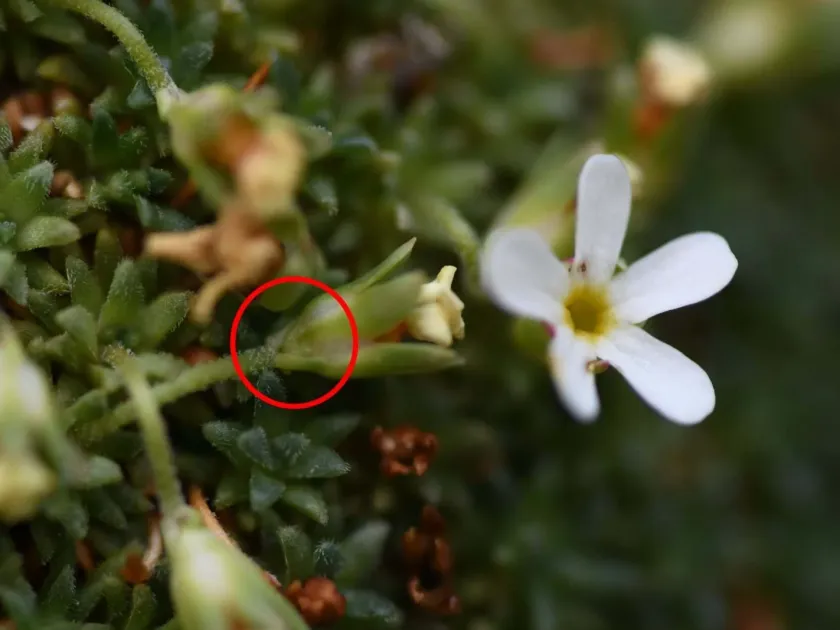
Botanically, this plant is characterized by its cushion-forming growth habit, which is an evolutionary adaptation to preserve heat and moisture in cold, windy conditions. The foliage consists of tiny, densely packed leaves that provide a classic moss-like appearance, eventually producing small, delicate flowers.
When cultivating this species, the grower must replicate its natural rocky habitat. The soil requirements are strict: the substrate must be highly inorganic, consisting mainly of granite grit or scree with excellent drainage capabilities to prevent root rot during the dormant season.
Climate management is crucial for the success of Androsace pyrenaica. While the plant loves bright, direct sunlight, it is intolerant of high summer heat combined with humidity. In garden settings, partial shade during the hottest hours of the day is often necessary for long-term health.
The primary use of this species is in specialized rock gardens and alpine houses. Its aesthetic value lies in its miniature stature and ability to produce a carpet of flowers that covers the entire cushion, making it a prized specimen for collectors of mountain flora.
Main diseases and pests
The most significant threat to the Pyrenean rock jasmine is the development of fungal pathogens, particularly root and crown rot, which occur when drainage is insufficient or ventilation is poor. Ensuring a dry environment around the crown is essential for plant longevity.
Pests such as spider mites may occasionally infest the foliage, particularly if the plant is grown in a greenhouse or restricted container environment. Regular monitoring and maintaining proper air circulation are the best methods to keep the plant free from pest pressure.