
Blunt-leaved rock jasmine
Androsace obtusifolia
Description
Growing requirements
The blunt-leaved rock jasmine (Androsace obtusifolia) is a perennial herbaceous plant belonging to the Primulaceae family. It naturally occurs in the alpine regions, typically colonizing mountain meadows and scree slopes at high altitudes.
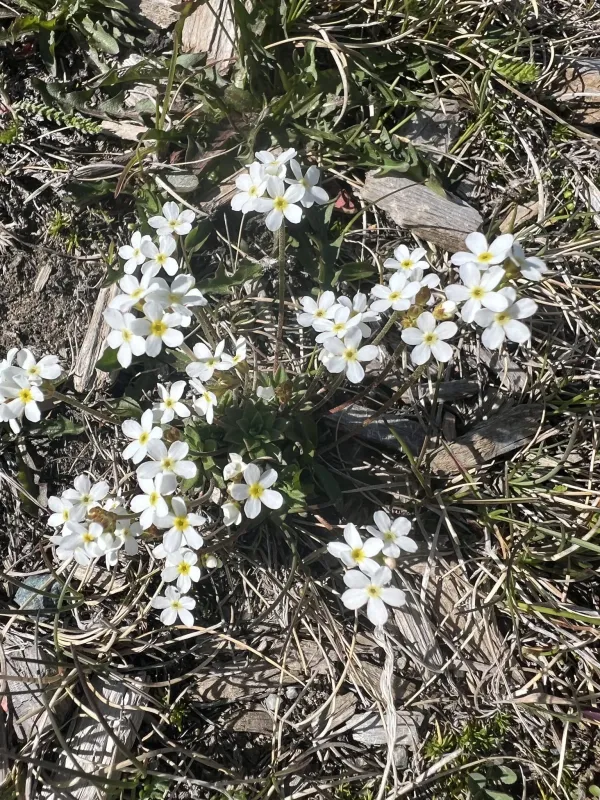
Botanically, it features a basal rosette of oblong or spatulate leaves, providing a compact appearance. During its flowering phase, slender stalks bear delicate white or pale pink flowers arranged in umbels, which enhance the aesthetic appeal of rock gardens.
To cultivate this species successfully, growers must emulate alpine conditions. The plant requires a site with full sun exposure and exceptional drainage to prevent root moisture accumulation, which is critical for its long-term survival.
The soil should be gritty and lean, often supplemented with stone chippings or gravel to mimic the stony substrate of its native habitat. Regular moisture is needed during the growing season, but the root zone must never remain waterlogged.
Its primary use in landscaping is the decoration of rock gardens, trough gardens, and alpine beds. Because of its structural form, it serves as an excellent ground cover for small, well-drained spaces where other plants might struggle to thrive.
Main diseases and pests
The most significant threats to Androsace obtusifolia are fungal pathogens, specifically those causing root and crown rot. These issues are almost always triggered by poor drainage or inadequate air circulation around the leaf rosettes.
Pests such as spider mites may occasionally infest the plants, particularly during hot, dry spells. Effective management involves maintaining a clean garden environment and using targeted acaricides if a heavy infestation is detected early.