
Androsace maxima
Androsace maxima
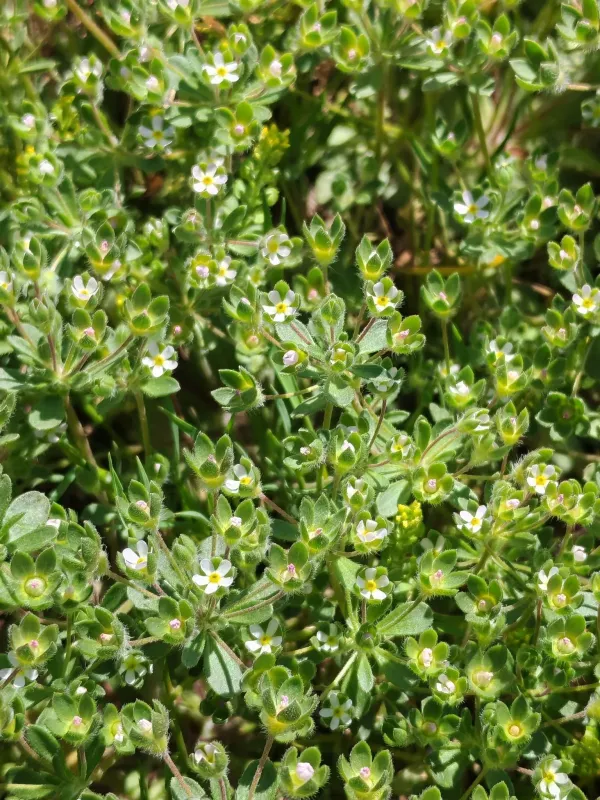
Description
Sowing dates
Androsace maxima belongs to the category of early spring or overwintering annuals. Seed germination typically occurs in the autumn or early spring as soon as the soil warms up to minimal positive temperatures.
Autumn seedlings pass through a rosette stage, which allows them to successfully overwinter even under shallow snow cover. The spring growth cycle begins very early, giving the plant a competitive advantage over many crop species.
Intensive vegetative growth is observed in March and April. Flowering starts by mid-spring, and seeds mature by late May or early June, well ahead of the harvest of major agricultural crops.
Optimal timing for seedling emergence depends on the moisture content of the topsoil. In dry years, seeds can remain viable in the soil seed bank for several seasons, waiting for favorable conditions.
Effective agronomic control includes mandatory pre-sowing cultivation, which destroys the seedlings before the main crop emerges.
Growing requirements
This member of the Primulaceae family prefers open, well-lit areas. It is frequently found in fallow fields, wastelands, and winter cereal crops where shading is minimal.
The plant is not very demanding regarding soil conditions, but it prefers light sandy loam or loamy soils with good aeration. It tolerates temporary compaction of the upper soil horizon reasonably well.
The plant possesses high ecological plasticity, allowing it to colonize both moist sites and dry slopes. It acts as an indicator species, often highlighting the presence of unoccupied land or sparse vegetation cover.
The temperature regime is primarily important during the initial development stages as the plant is cold-hardy. It successfully completes its life cycle before the onset of peak summer temperatures.
In intensive farming, the plant's moisture requirements are met by spring rainfall, which is generally abundant during this time of year within its natural range.
Main diseases and pests
Although Androsace maxima is rarely a dangerous parasite, it is an active competitor for moisture and nutrients during the critical early spring period, directly impacting crop growth.
There are virtually no specific pests that exclusively target this species; however, the plant can serve as a reservoir for certain aphid species that transmit viral diseases to agricultural crops.
Common diseases affecting Primulaceae may appear during periods of excessive humidity. These include various types of spotting caused by fungal pathogens that reduce the overall vigor of the weed.
In high-intensity agriculture, chemical weeding remains the primary method for controlling its spread. Sulfonylurea herbicides and other agents show high efficacy when applied according to regulations.
Mechanical removal of young rosettes through harrowing also provides good results, especially in cereal crops, provided the procedure is performed during the tillering phase of the main crop.