
Lagger's rock jasmine
Androsace laggeri
Description
Growing requirements
Lagger's rock jasmine (Androsace laggeri) is a perennial herbaceous plant belonging to the Primulaceae family. Native to the high-altitude regions of the Pyrenees, this species has evolved to thrive in harsh, rocky alpine environments.
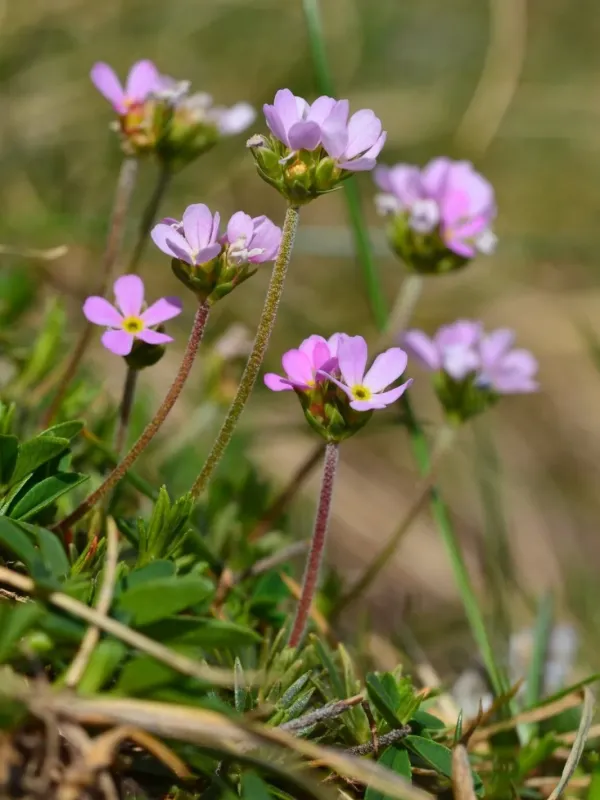
The plant is defined by its compact, cushion-forming growth habit, consisting of dense rosettes of narrow, lanceolate leaves. During the spring, it produces short stems topped with vibrant pink or purple flowers, making it a highly prized specimen for alpine enthusiasts.
Successful cultivation requires a location that mimics its natural habitat, emphasizing full sun exposure and excellent drainage. It is essential to provide a gritty, stony substrate that prevents any accumulation of moisture around the root zone, as the species is highly susceptible to rot.
Climatic requirements involve cool growing seasons with protection from extreme summer heat. In lowland gardens, it is often grown in containers or specialized scree beds where environmental conditions can be closely monitored and controlled.
General maintenance includes cautious watering, ensuring that moisture is applied to the soil rather than the foliage. Fertilizer application should be avoided or kept to a absolute minimum to prevent leggy, weak growth that reduces the plant's natural cold hardiness.
Main diseases and pests
The primary threats to this culture are fungal diseases, particularly crown and root rots caused by excess humidity and poor air circulation. Proper surface drainage using fine gravel or grit is crucial to protecting the foliage from soil-borne pathogens.
Pests such as spider mites and aphids may occasionally infest the dense rosettes, especially during hot, dry weather. Regular monitoring and the application of mild horticultural oils or targeted insecticides can manage populations without damaging the delicate structure of the plant.