
Hedraeantha rock jasmine
Androsace hedraeantha
Description
Growing requirements
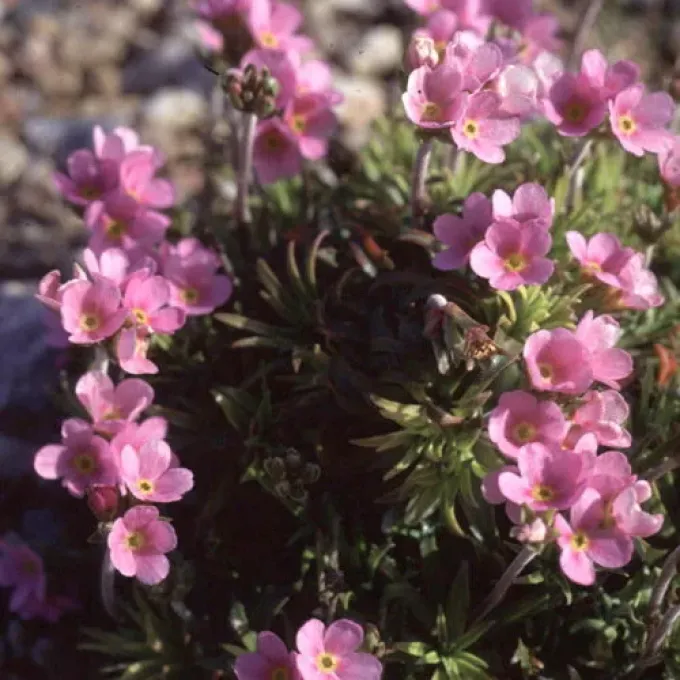
Androsace hedraeantha, commonly known as rock jasmine, is a perennial herb belonging to the Primulaceae family. It is native to high-altitude mountain ranges, where it thrives in rocky crevices and alpine screes.
The plant is characterized by its compact, cushion-forming habit. Its small leaves are arranged in tight rosettes, an evolutionary adaptation that allows the plant to survive in exposed, windy, and high-light environments.
Cultivation requires conditions that mimic its natural mountainous habitat. A gritty, well-draining soil is non-negotiable; standing water or waterlogged roots will almost certainly cause the plant to perish.
Rock jasmine demands full sun exposure to maintain its dense growth form. In lower-altitude gardens, it is essential to ensure adequate airflow, as stagnant, humid air can lead to foliage rot and other physiological stressors.
The species is highly frost-hardy, reflecting its alpine origin. However, it requires careful handling during wet winters, as moisture trapped around the rosette crown can lead to winter kill even in cold-tolerant individuals.
Main diseases and pests
The primary threat to Androsace hedraeantha is root rot, typically caused by improper drainage or excessive soil moisture. This condition is often fatal and difficult to treat once established in the dense cushion.
Fungal pathogens represent a significant risk, particularly during periods of high humidity. Preventive measures include top-dressing the soil surface with small gravel to prevent foliage from direct contact with moist soil.
Pests such as slugs and snails can feed on the tender rosettes during spring. These creatures are attracted to the succulent-like foliage, and their presence can quickly disfigure the plant's aesthetic appeal.
Integrated pest management, including manual removal and the use of physical barriers, is preferred over synthetic pesticides, which may damage the delicate tissue of the alpine species.
Good cultural practices, such as removing debris and ensuring the plants are not overcrowded, significantly reduce the incidence of both fungal attacks and pest infestations in alpine garden beds.