
Androsace delavayi
Androsace delavayi
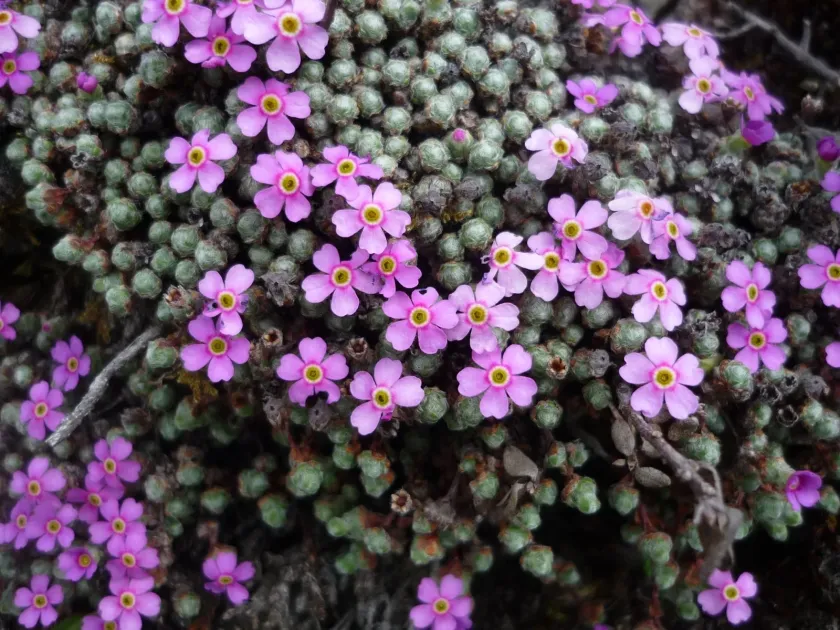
Description
Sowing dates
Androsace delavayi, a member of the Primulaceae family, is a delicate alpine species requiring precise cultivation techniques. Seeds are typically sown in late autumn, benefiting from a natural cold stratification period necessary to overcome dormancy.
The sowing medium should be highly mineral, consisting of a mix of grit, sand, and a small amount of peat or leaf mold. Sowing is best done in pots that allow for excellent drainage and air circulation around the seedlings.
Since the seeds are extremely small, they should be scattered on the surface and barely covered with a thin layer of fine grit. It is crucial to maintain consistent moisture during the germination phase without creating a waterlogged environment.
Once seedlings have developed their second set of true leaves, they should be carefully pricked out into individual pots. Using small clay pots is often preferred, as they provide better aeration for the roots of these sensitive plants.
Transitioning to the final planting location should be done in spring, ensuring the plants are well-established. They perform best in rockeries or alpine troughs where drainage can be perfectly controlled.
Growing requirements
The native habitat of Androsace delavayi is the high-altitude regions of Southwest China. Consequently, the plant demands cool temperatures and is highly sensitive to the heat and humidity typical of lowland summer climates.
The soil must be gritty and free-draining to prevent root rot, which is the primary cause of failure in this species. Adding a significant proportion of limestone chips or granite grit to the soil mix is recommended.
Bright, filtered light is ideal for healthy growth. Intense, direct midday sun can be harmful, so a north-facing aspect or shading during the hottest hours of the day is often necessary for long-term survival.
Watering requires care; the substrate should remain slightly moist but never saturated. In pots, bottom watering is the most efficient method to maintain moisture levels while keeping the crown of the plant dry.
Air circulation is vital for the health of these plants, especially in alpine house or container conditions. Stagnant air leads to rapid fungal growth, which can destroy the cushion of the plant within a few days.
Main diseases and pests
Root and crown rot are the most common threats to Androsace delavayi. These diseases are almost always linked to poor drainage or excessive atmospheric humidity combined with high temperatures, which favor pathogen development.
Small pests like aphids and spider mites can infest the dense foliage mats. Regular inspection is necessary, and if an infestation is detected, it should be treated promptly with mild, systemic insecticides or horticultural oils.
Slugs and snails are particularly problematic for young, tender cushions. Implementing physical barriers such as crushed eggshells or copper tape around the planting area can significantly reduce damage during the growing season.
Winter wetness is a major concern in regions with mild, wet winters. Protecting the plants with a glass cover or cold frame can prevent the foliage from becoming waterlogged, which is often fatal to the species.
Nutrient deficiencies, particularly involving trace elements, can manifest as leaf chlorosis. Using a balanced, low-concentration fertilizer formulated for alpines during the active growing season can mitigate these issues.