
Ciliate rock jasmine
Androsace ciliata
Description
Growing requirements
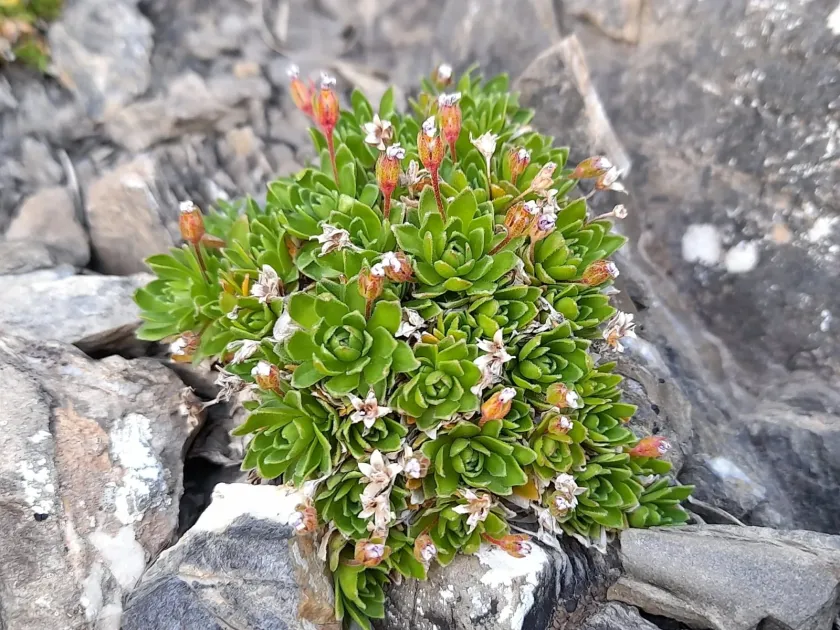
The Ciliate rock jasmine (Androsace ciliata) is a distinct perennial herb belonging to the Primulaceae family. It is native to the high-altitude regions of the Pyrenees, where it thrives in harsh, rocky environments, clinging to cliffs and debris slopes above the timberline.
The plant is characterized by its compact, cushion-forming habit, which provides natural protection against wind and cold. Its leaves are fringed with fine hairs, and during the flowering season, the foliage is adorned with small, vibrant pink to purplish flowers.
Successful cultivation requires mimicry of its alpine habitat. The soil must be exceptionally well-draining, composed largely of rock fragments, grit, and minimal organic matter. Poor drainage quickly leads to root rot and is the primary cause of plant failure in garden settings.
This species demands a cool climate with high light intensity but avoids excessive heat. It is best suited for alpine houses or specialized rock gardens in regions where summers are relatively cool and humidity can be strictly managed through constant ventilation.
Economically, this plant is primarily utilized in niche horticulture and professional plant collections. Due to its slow development and rigorous environmental requirements, it is not considered a mass-market agricultural commodity but rather a collector's prized specimen.
Main diseases and pests
Fungal pathogens and root rot are the most significant threats to the Ciliate rock jasmine, especially when humidity levels remain too high. The crown of the plant is particularly susceptible to moisture, so top-dressing with clean gravel is essential for protection.
Pests such as spider mites may occasionally affect plants if the atmosphere becomes too dry and stagnant. Maintaining good air circulation is the best preventive measure to ensure the long-term health of these mountain-adapted specimens.