
Short rock-jasmine
Androsace brevis
Description
Growing requirements
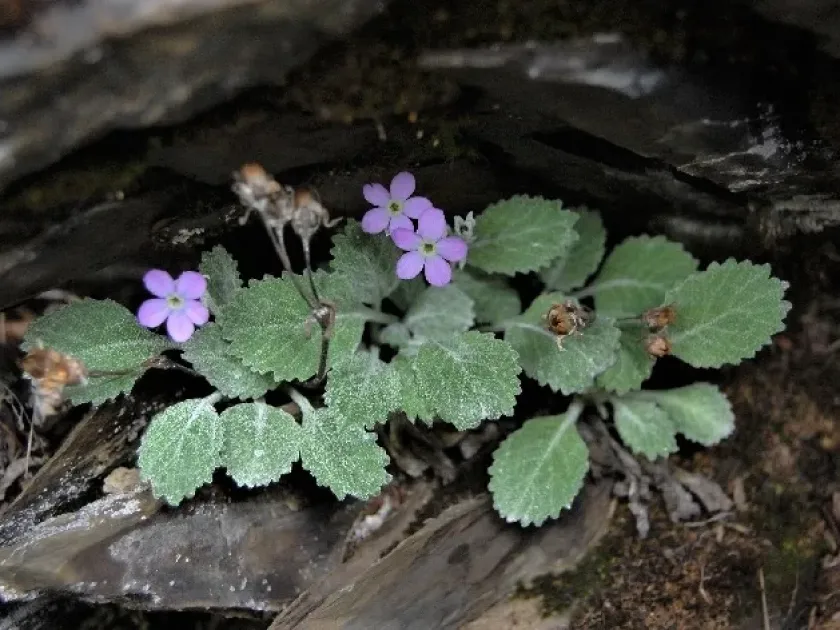
The short rock-jasmine (Androsace brevis) is a perennial herbaceous plant belonging to the Primulaceae family. It is a rare, relict species native to restricted high-altitude alpine zones, primarily found in rocky crevices and scree slopes.
Cultivation requires conditions that strictly mimic alpine environments. The growing medium must be highly mineral, consisting of a mix of gravel, crushed rock, and grit to ensure rapid water drainage, as the species is intolerant of moisture around the root neck.
Regarding climate, the plant thrives in cool, high-light environments with significant diurnal temperature fluctuations. In lowland gardens, providing adequate airflow and protecting the plant from excessive summer heat is essential for its survival.
Standard agrotechnical practices for Androsace brevis focus on maintaining its tight, cushion-like growth form. Deep planting containers are often preferred over shallow ones to accommodate the deep-reaching taproot system and ensure stability.
The primary use of the short rock-jasmine is in specialized ornamental horticulture. It is a prized specimen for alpine house collections, rock gardens, and troughs, where its compact size and delicate flowers provide significant aesthetic value.
Main diseases and pests
The most significant threat to this species is overwatering, which leads to root rot and fungal infections. Maintaining a dry neck area is crucial for the health of the plant throughout the dormant and growing seasons.
Pests such as spider mites may occur in protected cultivation environments where air circulation is insufficient. Regular monitoring and maintaining appropriate humidity levels are standard defensive measures against such outbreaks.
Fungal pathogens like Botrytis can affect the dense foliage cushions if humidity is too high. Improving ventilation and keeping the foliage surface dry are key preventative strategies for successful management.
Root-feeding nematodes pose a silent threat to the vitality of the plant. Using sterilized growing media and obtaining plants from reputable, disease-free sources is a critical step in preventing infestation.
Environmental stress, particularly during unexpected warm spells in late winter, can cause premature growth which is vulnerable to frost damage. Protective covers are used by growers to mitigate these climate-induced risks.