
Rock jasmine
Androsace
Description
Growing requirements
Rock jasmine (genus Androsace) belongs to the Primulaceae family and comprises various species primarily native to the alpine and arctic regions of the Northern Hemisphere. These plants are highly regarded for their ability to thrive in extreme mountainous environments.
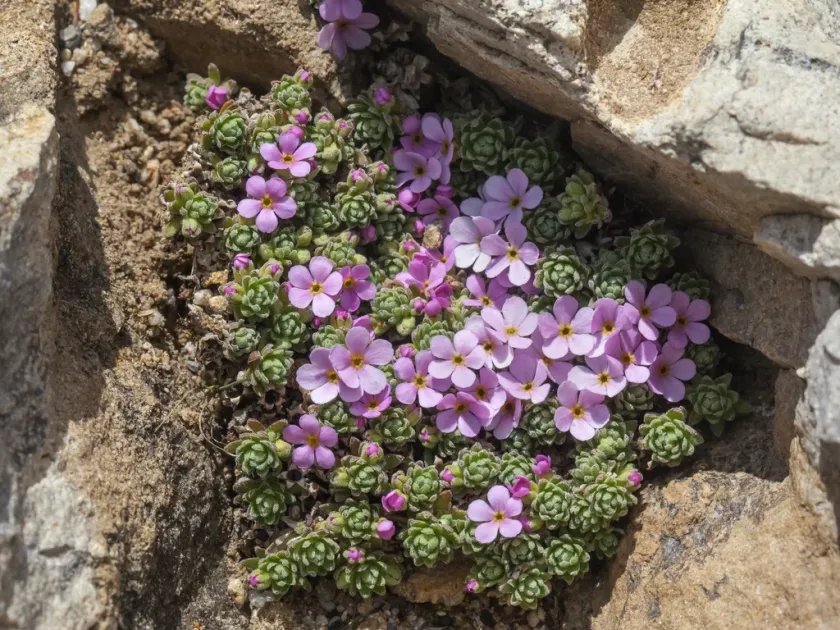
Morphologically, these plants are known for their characteristic cushion-forming growth habit. The foliage is typically arranged in tight rosettes, which serves as an adaptation to minimize transpiration and survive the harsh winds found at high altitudes.
Cultivation requires specific soil conditions, prioritizing exceptional drainage. A mix of gritty, mineral-rich soil is essential to prevent moisture retention near the crown, as the plant is notoriously intolerant of "wet feet" during the dormant season.
Climatic requirements focus on cool temperatures and high light intensity. While they thrive in open, sunny locations, they often require protection from the intense heat of a low-altitude summer to maintain their structural integrity and foliage color.
Standard care involves careful monitoring of irrigation levels. During the growing season, a moderate, controlled watering schedule is necessary, ensuring that the water is applied directly to the soil rather than over the sensitive leaf rosettes.
Main diseases and pests
The primary health threat to Rock jasmine is fungal infection caused by humidity and poor air circulation. Root and crown rot are the most frequent causes of plant loss, often triggered by water-logging the root zone.
Pest issues typically include infestation by spider mites or aphids, particularly in glasshouse or nursery conditions. Keeping the plants in well-ventilated areas with appropriate spacing significantly reduces the risk of these infestations spreading.