
Veitch's peony
Paeonia veitchii
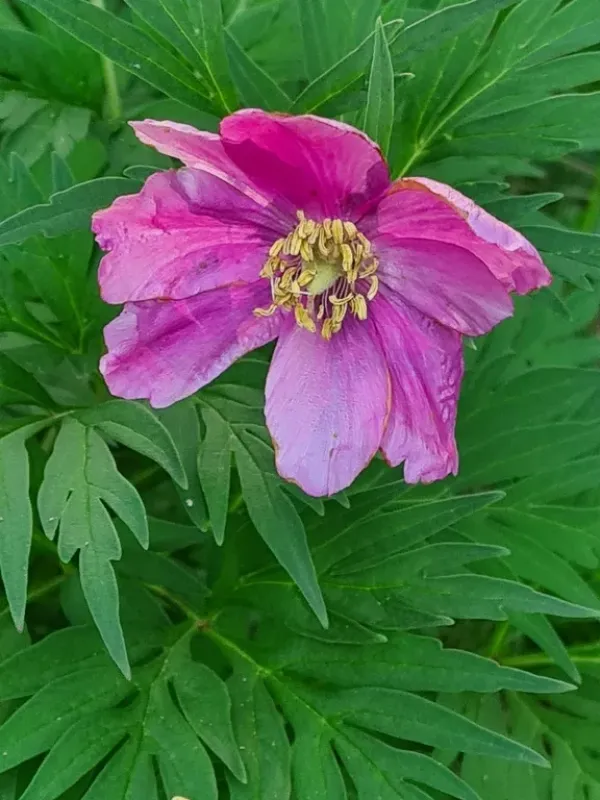
Description
Sowing dates
Propagation of Veitch's peony is primarily achieved through seeds or division of the rhizome. Sowing seeds is recommended immediately after harvest in autumn, as they require a prolonged stratification period to ensure successful spring germination.
When sowing in the ground, seeds should be placed at a depth of 3–5 cm in prepared loose soil. It is crucial to provide uniform moisture to the site to prevent the seed bed from drying out during the winter-spring transition.
Division of the rootstock is best performed in late August or early September. This timing allows the plant sufficient opportunity to establish its root system before the onset of persistent frosts.
When dividing, ensure each segment contains at least three growth buds and a healthy portion of the rhizome. The planting depth for divisions should be approximately 5–7 cm from the buds to the soil surface.
Veitch's peony exhibits a slow growth rate in its early years. The first flowering of plants grown from seed typically occurs in the third or fourth year following germination.
Growing requirements
This peony species belongs to the Paeoniaceae family and is native to the mountainous regions of China. The plant thrives in sunny or partially shaded locations with protection from strong, desiccating winds.
Preferred soil conditions include well-drained, fertile loams with a neutral to slightly acidic pH. It is essential to avoid sites with high water tables, as excess moisture is detrimental to the root system.
The plant demonstrates high cold hardiness and adapts well to temperate climate conditions. During hot summer spells, Veitch's peony requires regular irrigation, particularly during the bud development and flowering stages.
Agrotechnology involves systematic loosening of the root zone and mulching with humus or peat. These practices help retain soil moisture and suppress weed growth around the plant base.
Mineral fertilization should be applied in stages: nitrogen in early spring for vegetative growth, and phosphorus-potassium compounds during the budding phase to support vigorous flower production.
Main diseases and pests
The primary threats to Veitch's peony are fungal diseases that thrive in high humidity. Grey mold (Botrytis) frequently affects stems and leaves during damp weather, leading to premature wilting and decay.
To prevent disease transmission, maintain proper spacing between plants to ensure adequate air circulation. Proactive treatment with fungicides at the beginning of the growing season can significantly reduce infection risks.
Common pests include aphids and thrips, which sap nutrients from young shoots and developing buds. In cases of significant infestation, systemic insecticides should be applied according to label instructions.
Root systems may be susceptible to rot if soil water drainage is poor, which fosters pathogenic soil microorganisms. Regular sterilization of pruning tools is a mandatory practice for maintaining site sanitation.
In autumn, the aerial parts of the plant should be removed after the first frost to eliminate wintering sites for fungal spores. Plant debris should be burned to prevent re-infection in the following season.