
Rhodian peony
Paeonia rhodia
Description
Growing requirements
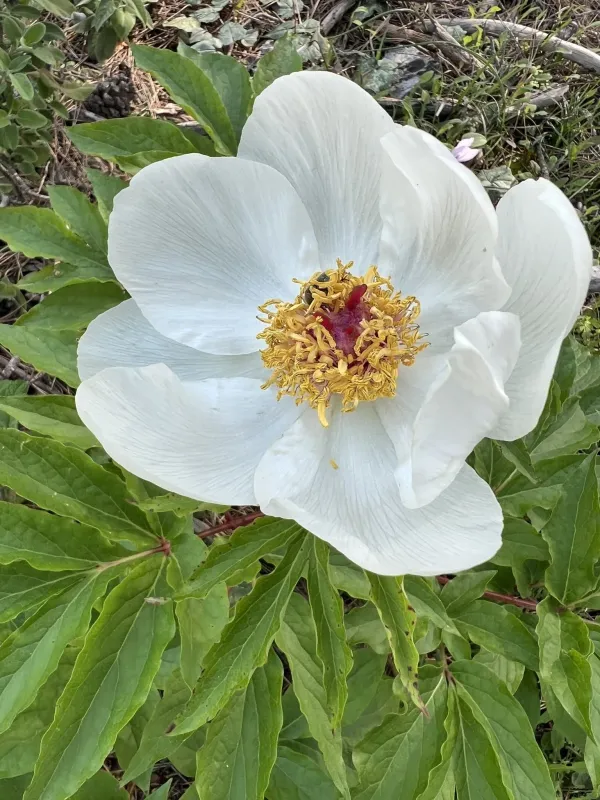
The Rhodian peony (Paeonia rhodia) is a herbaceous perennial plant belonging to the Paeoniaceae family. It is a strictly endemic species naturally found only on the island of Rhodes, making it a highly specialized plant in terms of ecological requirements.
This species thrives in well-drained, rocky, and alkaline soils. In its native habitat, it grows on stony slopes and open woodlands, where the soil structure ensures excellent drainage, preventing the roots from being subjected to waterlogging, which is lethal to the species.
Regarding climate, the plant is adapted to a Mediterranean regime characterized by wet winters and hot, dry summers. It requires full sun to partial shade exposure, provided that the soil temperature does not become excessively high during the dormant period.
Cultivation practices involve a careful approach to fertilization. Because the Rhodian peony is accustomed to nutrient-poor soils, heavy application of nitrogenous fertilizers should be avoided as it leads to excessive foliage growth at the expense of root development.
The economic value of this plant is primarily ornamental and botanical. It serves as a rare specimen for specialized gardens and a valuable genetic source for breeding programs aimed at developing drought-tolerant peony varieties for warm climates.
Main diseases and pests
The primary threats include fungal pathogens such as grey mold (Botrytis), which can proliferate during periods of high humidity and poor ventilation. Keeping the root zone dry and ensuring sufficient spacing between plants is critical for preventing outbreaks.
Typical pests include aphids, which often feed on tender emerging foliage, and spider mites during prolonged periods of drought. Integrated pest management using organic-based acaricides is recommended to maintain plant vigor without disrupting the local ecosystem.