
Paeonia peregrina
Paeonia peregrina
Description
Sowing dates
Propagation of Paeonia peregrina is primarily achieved through root division, which is best performed in late summer or early autumn. This timing allows the root system to establish itself before the onset of winter dormancy.
When preparing the planting site, ensure a hole depth of approximately 60 cm. Incorporating compost and ensuring excellent drainage at the base of the hole is essential to prevent root rot in these perennial plants.
Seed propagation is possible but slow and usually reserved for breeding purposes. Seeds typically require a two-stage stratification process and may take several years to reach the first flowering stage.
Spacing is critical for the health of the plants; maintain a distance of at least 80-100 cm between individual specimens. Proper spacing promotes adequate air circulation, which is vital for preventing common fungal infections.
Planting depth should be carefully monitored, with the "eyes" or buds of the rootstock placed 3-5 cm below the soil surface. Planting too deep will inhibit flowering, while planting too shallow can expose the buds to frost damage.
Growing requirements
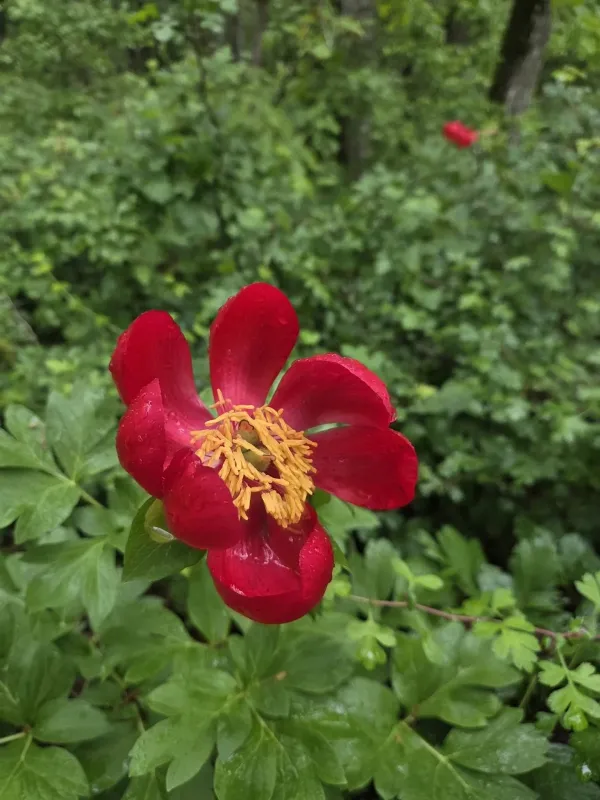
Paeonia peregrina, commonly known as the cornflag peony, belongs to the Paeoniaceae family. It is a perennial herbaceous plant native to the Balkan Peninsula and parts of Turkey and Southeastern Europe.
The species thrives in locations with full sun exposure, although it can tolerate light shade. In areas with intense summer heat, afternoon shade can help preserve the vibrancy of the petals and prolong the blooming period.
Soil requirements include high fertility and a well-drained structure. A neutral or slightly alkaline pH level is ideal. Heavy clay soils should be amended with organic matter and coarse sand to improve drainage and aeration.
Watering is particularly important during the spring growth phase and the bud formation period. Once established, the plants show a degree of drought tolerance, but consistent moisture levels during dry spells will improve flower quality.
The plant is hardy in temperate climates. While it can withstand cold winters, protecting the root zone with a light mulch in areas with harsh, freezing winters helps to insulate the buds and ensure vigorous spring growth.
Main diseases and pests
Grey mould, caused by Botrytis cinerea, is the most significant threat to Paeonia peregrina. It often manifests during cool, damp springs, affecting both the foliage and the flower buds of the plant.
Powdery mildew is another common issue, presenting as a white dusty coating on the leaves. It usually occurs in mid-to-late summer, especially in areas with poor air circulation or high humidity levels.
Root-knot nematodes can cause severe damage by creating swellings on the root system. Infested plants typically show stunted growth and should be removed and destroyed to prevent the spread to adjacent specimens.
Aphids and thrips may also frequent the plants, targeting tender shoots and buds. Monitoring for these pests is essential, and horticultural soaps or systemic insecticides can be used if infestations are detected.
- Remove all dead plant material at the end of the season.
- Avoid overhead irrigation to minimize foliage wetness.
- Apply fungicidal treatments proactively in regions with a history of fungal outbreaks.
Harvesting
For ornamental use, harvesting flowers for bouquets should occur when the bud is showing color but has not yet fully unfolded. This stage ensures the best vase life for the cut flowers.
Always use sharp, sterilized tools when cutting stems to prevent the transmission of pathogens. It is recommended to leave about one-third of the foliage on the plant to support the plant's metabolic needs.
In autumn, as the foliage turns brown and begins to die back naturally, cut the stems down to near ground level. This practice removes potential overwintering sites for pests and fungal spores.
The removed foliage should be disposed of away from the garden, preferably by burning or discarding it with municipal waste, to prevent the re-introduction of diseases into the soil environment.
Sustainable harvesting practices are essential for long-term plant health. By not over-harvesting from a single clump, gardeners ensure that the peony remains vigorous and blooms reliably for many seasons to come.