
Yellow peony
Paeonia lutea
Description
Growing requirements
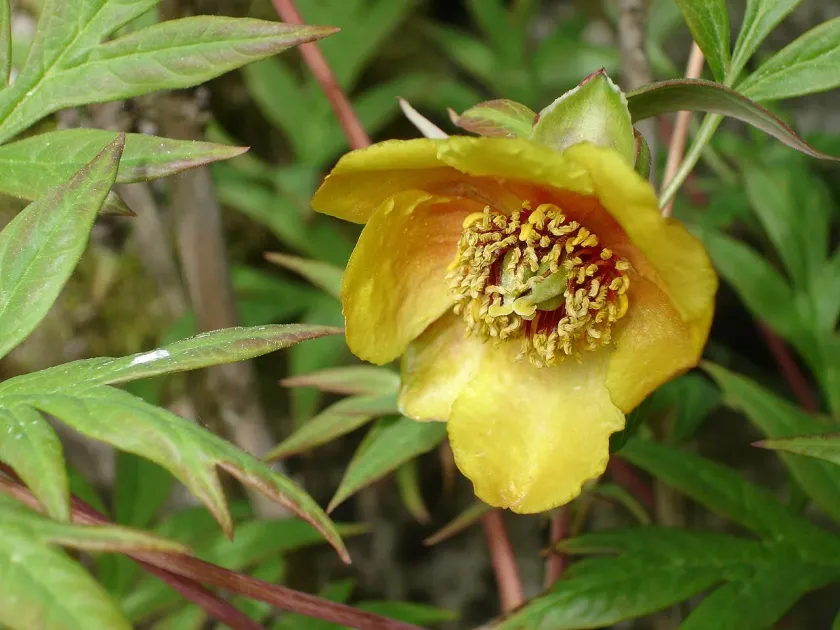
The yellow peony (Paeonia lutea) is a perennial deciduous shrub belonging to the Paeoniaceae family. Originating from the mountainous regions of China, particularly in Yunnan and Sichuan provinces, it is highly valued for its striking yellow flowers and architectural foliage.
This species features woody stems, distinguishing it from common herbaceous peonies. It typically grows as a robust bush, reaching heights of up to 1.5 meters, making it an excellent candidate for ornamental shrub borders in moderate climates.
Climatic requirements involve a site that provides ample sunlight for flowering, though protection from intense afternoon sun helps preserve the intensity of the yellow pigments. The plant is hardy but benefits from shelter against harsh, drying winds.
Regarding soil preferences, Paeonia lutea requires deep, fertile, and well-drained soil. Heavy clay substrates must be amended with organic matter and drainage materials like coarse sand to prevent root suffocation.
Cultural practices include regular moisture management during the active growth period and mulching to keep roots cool. Feeding with low-nitrogen, high-phosphorus fertilizers in early spring supports strong flower production and structural development.
Main diseases and pests
The most significant pathological threat to the yellow peony is Botrytis blight, which manifests as gray mold on stems, leaves, and buds during wet weather. Improving air circulation around the plant is the primary defensive strategy.
Root rot is a common physiological threat caused by poor soil drainage. When plants are sited in waterlogged conditions, the roots become vulnerable to fungal pathogens that can rapidly decline the plant's health.
Pests such as aphids often colonize the buds, extracting plant sap and potentially transmitting viruses. Consistent monitoring and early application of insecticidal soap or specialized systemic agents are effective control measures.
Leaf spots caused by various fungi can occur in late summer, particularly after periods of prolonged rainfall. Removing infected foliage at the end of the season reduces the inoculum for the following year.
While generally robust, the plant can be sensitive to scale insects. Checking the stems during dormant periods allows for physical removal of these pests, ensuring the plant remains vigorous for the next growing cycle.