
Japanese peony
Paeonia japonica
Description
Growing requirements
The Japanese peony, Paeonia japonica, is a perennial herbaceous plant belonging to the Paeoniaceae family. Native to the forest regions of Japan and the Korean Peninsula, it thrives in shaded environments and is valued for its elegant, simple appearance.
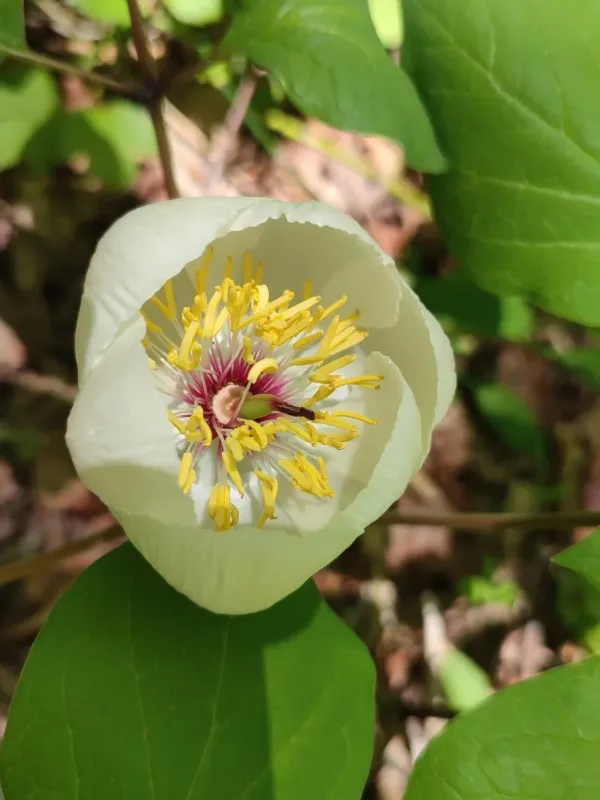
Botanically, this plant grows to approximately 30–50 cm in height. It features alternate, compound leaves with oval leaflets and solitary white or pale pink flowers, which typically bloom in late spring and are characterized by their prominent yellow stamens.
The climate requirements for this species are specific: it prefers cool, shaded sites protected from direct sunlight. It is an excellent choice for woodland gardens where the canopy provides the necessary filtration of light and maintains moderate humidity levels.
Regarding soil, the species demands a well-draining, humus-rich medium. The soil should be slightly acidic to neutral in pH. Proper drainage is essential, as waterlogging is highly detrimental to the tuberous roots of the plant and can lead to rapid rot.
In horticultural practice, Paeonia japonica is primarily cultivated as an ornamental plant. It is widely used in shade-loving plant collections and forest-style landscape designs due to its refined aesthetic appeal and relatively compact growth habit.
Main diseases and pests
The primary threats to Paeonia japonica involve fungal pathogens, most notably Botrytis (gray mold). This disease is particularly prevalent in high-humidity conditions and poor airflow, often resulting in the blight of young stems and flower buds.
Leaf spot diseases are also a significant concern, often triggered by prolonged damp weather. These infections cause necrotic areas on the foliage, which can weaken the plant's photosynthetic capacity and overall vigor if left unmanaged throughout the season.
Insect pests include nematodes, which can severely compromise the root system, and sap-sucking insects like aphids or thrips. These pests not only weaken the plant through nutrient extraction but can also act as vectors for secondary viral infections.
Integrated pest management involves cultural practices such as regular cleaning of the planting area to remove diseased plant debris, which serves as a reservoir for pathogens. Maintaining good spacing between plants is critical to ensuring adequate air circulation.
When chemical control is necessary, targeted fungicides and insecticides should be applied carefully. Over-application of fertilizers, particularly high-nitrogen blends, should be avoided, as it encourages succulent growth that is more prone to pest colonization.