
Hybrid peony
Paeonia hybrids
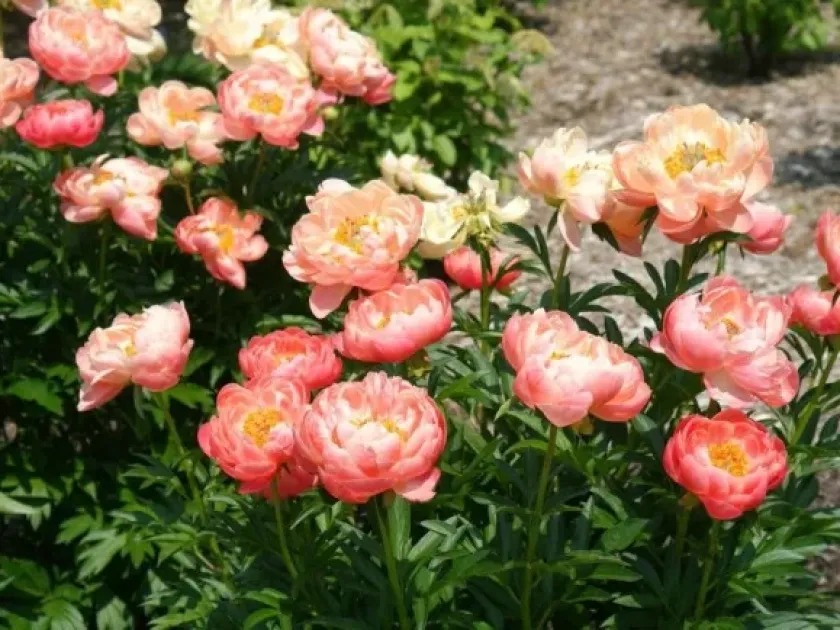
Description
Sowing dates
The primary method for propagating hybrid peonies is vegetative division of the root system. The ideal time for this procedure is late summer or early autumn, as the plant enters dormancy after its primary growing season, allowing the roots to establish before winter frost arrives.
When dividing, ensure the parent plant is at least three to four years old. Each division should contain at least 3–5 healthy buds, known as "eyes," and a sufficient portion of the rootstock to support the plant's growth and eventual flowering in subsequent years.
Seed propagation is reserved primarily for breeding programs to create new cultivars. This process is time-consuming, requiring several years of cultivation before the plant reaches maturity and produces its first flower, often not reflecting the exact characteristics of the parent plant.
Planting pits should be prepared several weeks in advance, allowing the soil to settle. Standard pit dimensions are approximately 60x60x60 cm, providing an enriched root zone that supports deep and healthy root development, which is critical for long-term survival.
Correct planting depth is vital for blooming success. The buds should be positioned 3–5 cm below the soil surface. Planting too deep will inhibit flower bud development, while planting too shallow risks bud damage from winter freezes and drought stress.
Growing requirements
The hybrid peony belongs to the Paeoniaceae family and is highly valued for its striking visual appeal. These plants are the result of complex cross-breeding, offering a wider range of colors, sturdier stems, and unique flower structures compared to traditional wild species.
Peonies thrive in open, sunny locations. While they can tolerate partial shade, at least 6–8 hours of direct sunlight is necessary for optimal bud formation and to prevent the stems from becoming leggy or weak, which is crucial for high-quality floral production.
Well-drained, fertile soil is a non-negotiable requirement for these perennials. They prefer neutral to slightly alkaline loamy soils. In heavier clay conditions, amending the soil with organic matter and sand is essential to improve drainage and prevent root rot.
Water management is a key aspect of peony care. While they require consistent moisture throughout the growing season, they are highly sensitive to waterlogged soil. Proper drainage systems should be implemented if the water table is high to prevent permanent damage to the roots.
Hybrid peonies are notably winter-hardy and well-adapted to temperate climates. During the first year after planting, it is recommended to apply a light mulch cover to stabilize soil temperatures, protecting the young root system from extreme fluctuations during the winter season.
Yield
The productivity of hybrid peonies is dependent on both the maturity of the plant and the intensity of the fertilization program. A mature, five-year-old bush can produce between 10 and 25 high-quality flower stems per season, depending on the specific cultivar and environmental conditions.
Effective management requires a balanced fertilizer schedule. Nitrogen is beneficial during early spring leaf growth, while phosphorus and potassium are essential applications after blooming to support root health and the development of next year's flower buds.
Pruning faded flowers is a crucial agricultural practice that redirects the plant's energy from seed production back into the root system. This practice ensures better plant health and ensures a more bountiful harvest of flowers in the following season.
Regular maintenance, including weeding and soil aeration, ensures that oxygen reaches the root zone. A weed-free environment also minimizes competition for nutrients and water, which is particularly important during the peak growth months of spring and early summer.
Peonies are exceptionally long-lived, often thriving in the same location for over two decades. However, as plants age, productivity may decline, signaling the need for division and transplantation to revitalize the growth of the stock and maintain commercial output.
Main diseases and pests
Botrytis blight, also known as gray mold, is the most common and devastating disease for peonies, especially in humid and rainy conditions. It causes dark spots on buds and stems, potentially leading to total plant collapse if not treated with systemic fungicides.
Powdery mildew often appears as a white, dusty layer on leaves during the latter part of the summer. While typically less destructive than gray mold, it reduces the plant's aesthetic appeal and can hinder the photosynthetic capacity needed for winter dormancy preparation.
Pests like aphids can significantly damage tender growth, particularly the buds, by extracting sap and distorting development. Furthermore, aphids can act as vectors for viral pathogens, making pest monitoring and control an essential component of professional plant management.
Root-knot nematodes can cause stunted growth and the formation of characteristic galls on the roots. These plants must be culled to prevent the spread of the infestation through the soil, as they rarely recover and will ultimately become a source of infection for the entire field.
Integrated pest management strategies, such as clearing plant debris in autumn and ensuring proper spacing for air circulation, are the most effective ways to reduce disease pressure and minimize the need for chemical interventions in a commercial setting.
Harvesting
Peonies are harvested at the "marshmallow" stage, where the bud is colored and soft to the touch but the petals remain tightly closed. This maturity stage ensures the flowers withstand the logistics process and open perfectly when placed in water for the end consumer.
When harvesting, leave at least two or three leaves at the base of the stem to maintain the plant's ability to photosynthesize. Removing the entire stem can starve the roots, leading to plant decline and significantly lower yields in future years.
Sanitized cutting tools are mandatory to prevent the transmission of pathogens between plants. The harvest should be done in the cool morning hours to maximize turgor pressure, followed by immediate placement in a clean, cool water solution to begin the conditioning process.
Post-harvest conditioning involves keeping the cut flowers in a cool, dark place to hydrate before they are graded and packed. This step is vital to ensure that the stems maintain their stiffness and the flowers reach their maximum vase life potential for the customer.
For commercial distribution, harvested stems are stored in refrigerated units at temperatures between 2°C and 4°C. This slows down the respiration rate, allowing for the extended shelf life necessary for international trade and wholesale distribution during the peak peony season.