
Caucasian peony
Paeonia daurica
Description
Growing requirements
The Caucasian peony (Paeonia daurica) is a perennial herbaceous plant belonging to the Paeoniaceae family. It is native to regions of Crimea and the Caucasus, where it typically grows in light woodland areas and on stony hillsides under diverse climatic conditions.
For successful cultivation, the plant requires well-drained, fertile soil with a neutral to slightly alkaline reaction. It thrives best in partial shade, where it is shielded from the harsh midday sun, which can scorch its delicate foliage and flowers.
Agrotechnical practices involve maintaining consistent soil moisture, particularly during the blooming season in late spring and early summer. Proper site selection is essential, as the plant prefers locations with good air circulation to maintain its overall vigor.
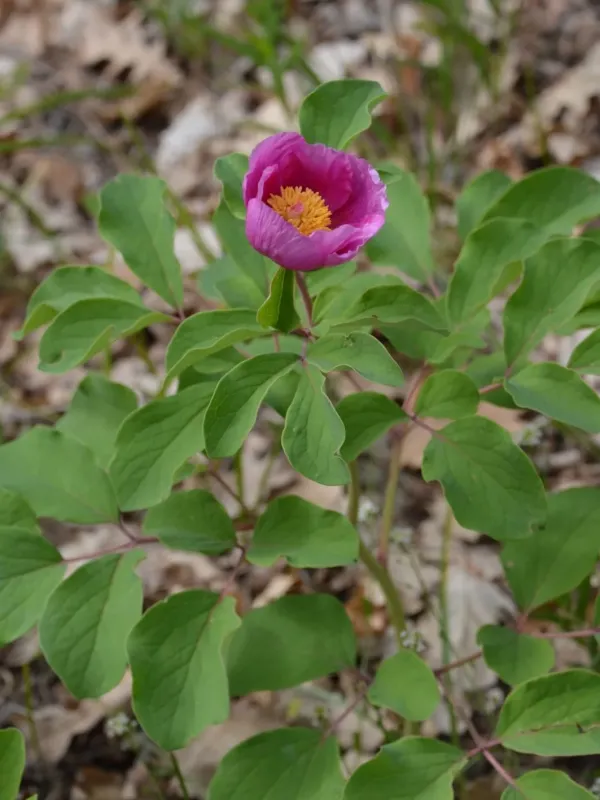
Botanically, this species is defined by its deep green, divided leaves and vibrant purplish-pink flowers. It typically reaches a height of 50 to 80 cm, establishing deep root systems that require minimal disturbance after initial planting.
In ornamental horticulture, the Caucasian peony is prized for its elegance and hardiness. It is often utilized in rock gardens, woodland-style landscape designs, and as part of specialized botanical collections focused on regional flora conservation.
Main diseases and pests
Gray mold (Botrytis) is the most significant pathological threat to this peony species, especially during wet and cool periods. It manifests as dark spots and fuzzy gray growths on stems and buds, necessitating immediate sanitary pruning of affected parts.
Common pests such as aphids and thrips can infest the flower buds and leaves, causing stunted growth and deformity. Effective management involves regular monitoring and the application of targeted pest control measures when early signs of infestation are noted.
Root rot is a common issue arising from poor drainage or overwatering. To mitigate this risk, it is crucial to plant the peony in a location with adequate water runoff and to avoid excessive moisture around the crown during the dormant winter period.
Nutrient management is essential to prevent susceptibility to diseases; high-nitrogen fertilizers should be avoided as they encourage lush, weak growth that attracts pathogens. Instead, rely on organic matter and balanced potassium-based fertilizers.
Sanitation practices after the first frost are vital: all foliage should be cut down to the ground level and removed from the garden area. This cycle of hygiene reduces the overwintering potential of spores and ensures a healthier emergence in the spring.