
Aerangis arachnopus
Aerangis arachnopus
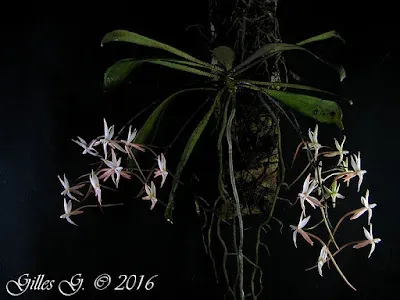
Description
Growing requirements
Aerangis arachnopus is a fascinating member of the Orchidaceae family, native to the tropical rainforests of West and Central Africa. As an epiphytic species, it lives on tree trunks and branches, relying on atmospheric moisture for its hydration and nutritional needs.
Successful cultivation of this species requires a stable environment with high humidity levels, ideally ranging between 70% and 80%. Due to its epiphytic nature, Aerangis arachnopus performs best when mounted on cork bark or grown in baskets with minimal organic media to allow for optimal root aeration.
The plant thrives in intermediate temperature ranges, preferring daytime temperatures between 22°C and 26°C with a noticeable nocturnal drop. This temperature gradient is essential for the plant's metabolic processes and successful seasonal blooming cycles.
Light requirements are strict; the plant requires bright, filtered light and must be protected from direct tropical or afternoon sun. Excessive exposure to solar radiation will lead to leaf bleaching and tissue necrosis, reducing the plant's photosynthetic efficiency.
Watering should be conducted using high-quality, low-mineral water to avoid salt accumulation on the delicate root system. Proper air movement is vital; stagnant, humid air often leads to fungal outbreaks, so the use of small internal fans is highly recommended for growers.
Main diseases and pests
Root and crown rot are the most common threats to Aerangis arachnopus, usually resulting from poor air circulation combined with excessive moisture retention. If the roots remain constantly saturated, they quickly lose the ability to exchange gases and begin to decay.
Pests such as scale insects and spider mites are persistent threats in indoor cultivation. Scale insects often hide in the tight leaf axils, making manual removal or systemic treatment difficult, while spider mites thrive in the drier microclimates of poorly ventilated rooms.
Bacterial soft rot can occur if water sits in the center of the fan for too long. This condition presents as dark, water-soaked patches that spread rapidly across the plant tissues, often resulting in the total loss of the specimen if not addressed early.
Nutrient deficiency or toxicity from improper fertilization schedules can weaken the plant's resistance. Providing a balanced, dilute fertilizer during the active growing season helps maintain robust growth, but over-fertilizing is harmful to these sensitive epiphytes.
To mitigate these risks, it is essential to maintain high hygiene standards, use sterile potting materials, and observe the plants daily. Preventive measures like regular mild fungicide applications during seasons of high humidity can effectively safeguard the collection.