
Blue flag iris
Iris versicolor
Description
Growing requirements
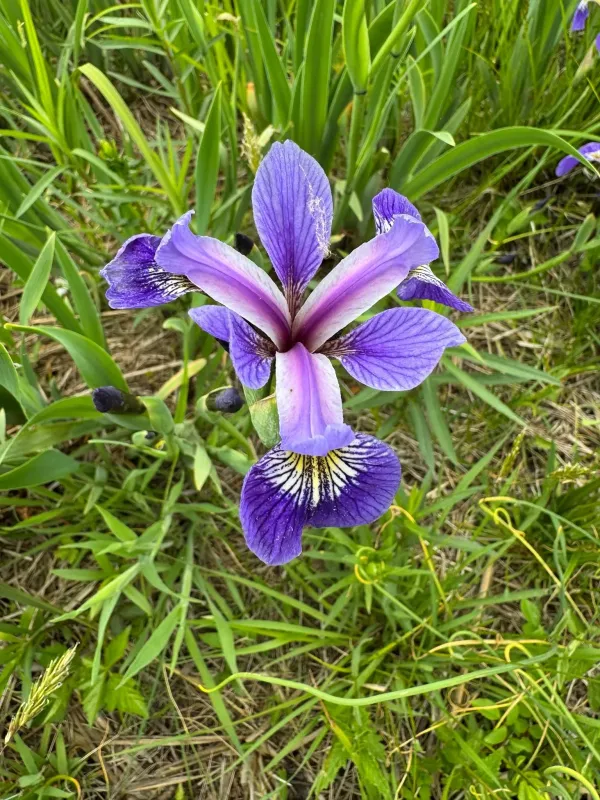
The Blue flag iris (Iris versicolor) is a perennial herbaceous plant belonging to the Iridaceae family. Native to North America, it naturally thrives in swamps, marshes, and along the banks of various water bodies.
In cultivation, this species demands high moisture levels. It is considered an obligate wetland plant, capable of growing in saturated soils or shallow water environments, which makes it ideal for water gardens.
The soil requirements focus on high organic content and moisture-retentive properties. Ideally, the plant prefers slightly acidic to neutral soil conditions, which support its vigorous rhizomatous growth pattern.
Sunlight exposure is a critical factor for successful development. While the plant can tolerate partial shade, full sun promotes more abundant flowering and strengthens the structural integrity of the stems.
From a horticultural standpoint, the species is widely used for shoreline stabilization and decorative planting in artificial ponds, providing aesthetic value and supporting local biodiversity.
Main diseases and pests
Bacterial soft rot of the rhizome is one of the most common threats, typically triggered by stagnant conditions and poor drainage, which can quickly lead to plant mortality.
Fungal leaf spot diseases, including Heterosporium iridis, are common problems. These infections result in discolored patches on the foliage, which can eventually spread and wither the entire leaf.
The iris borer is a significant pest that damages the rhizomes by tunneling into them, which may introduce pathogens that further compromise the health of the plant.
Bud-feeding insects, such as the iris weevil, can cause considerable damage during the spring growth phase, significantly reducing the success of the flowering season.
Preventative care, including the removal of dead foliage at the end of the season and ensuring adequate airflow between plants, is essential to mitigate these pest and disease risks.