
Juno iris
Iris magnifica
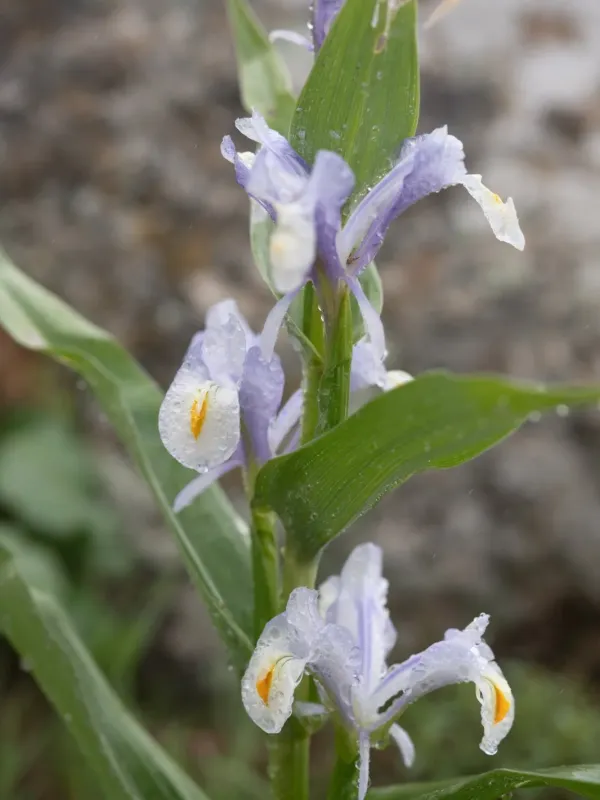
Description
Sowing dates
Juno iris (Iris magnifica) is a bulbous perennial belonging to the Iridaceae family. In professional and amateur horticulture, bulbs should be planted exclusively in the autumn, typically during September or October.
The ideal planting window occurs when soil temperatures at a depth of 10 cm drop to +10...+12°C. This specific temperature range allows the plant to establish initial roots before the onset of winter dormancy.
Planting depth should be adjusted according to bulb size, generally ranging from 8 to 12 centimeters. It is essential to maintain a distance of 15–20 centimeters between plants to ensure proper airflow and prevent foliage disease.
It is critical to remember that Juno bulbs are highly sensitive to moisture excess during their dormant phase. Therefore, gardeners should always incorporate a layer of coarse sand at the bottom of the planting hole to provide adequate drainage.
While propagation from seeds is possible, it is a lengthy process requiring cold stratification. Seedlings develop slowly and typically reach their first flowering stage only after four to five years of growth.
Growing requirements
The culture has strict environmental requirements, originating from the mountainous regions of Central Asia. The plants thrive in well-lit locations that offer protection from strong winds and harsh drafts.
The soil must be light, permeable, and maintain a neutral to slightly alkaline pH level. Heavy clay substrates are strictly unsuitable, as they tend to retain water and cause bulb rot during winter thawing periods.
The plant exhibits significant drought tolerance during the summer months, which is a key adaptation to its native habitat. After flowering, the above-ground parts rapidly wither, and the bulb enters a state of deep dormancy.
During the active growth period in early spring, moderate watering is necessary. It is important to avoid water stagnation, as excessive moisture leads to the development of fungal pathogens on the bulb base.
Fertilization should be managed using mineral fertilizers with reduced nitrogen content. This practice prevents excessive leaf growth, allowing the plant to redirect energy into developing healthy bulbs and robust flower stalks.
Main diseases and pests
The primary threats to Iris magnifica are fungal diseases affecting the root and bulb system. Conditions like fusarium and various types of rot are common consequences of improper drainage and high soil moisture.
Soil pests, particularly wireworms and seed-corn maggot larvae, can damage the bulb base, leading to plant decline. Preventive treatment of bulbs with appropriate fungicides prior to planting is highly recommended.
In early spring, the foliage may be susceptible to thrips and spider mites. Regular monitoring of leaves is essential to allow for the timely application of systemic insecticides when necessary.
Slugs and snails can cause significant damage to young shoots during periods of high humidity. Control methods include the use of barrier granules or manual removal during evening hours.
- Maintain proper crop rotation.
- Ensure excellent drainage.
- Disinfect soil before planting.
- Remove any infected plant debris.
- Control soil moisture levels during dormancy.