
Fringed iris
Iris japonica
Description
Growing requirements
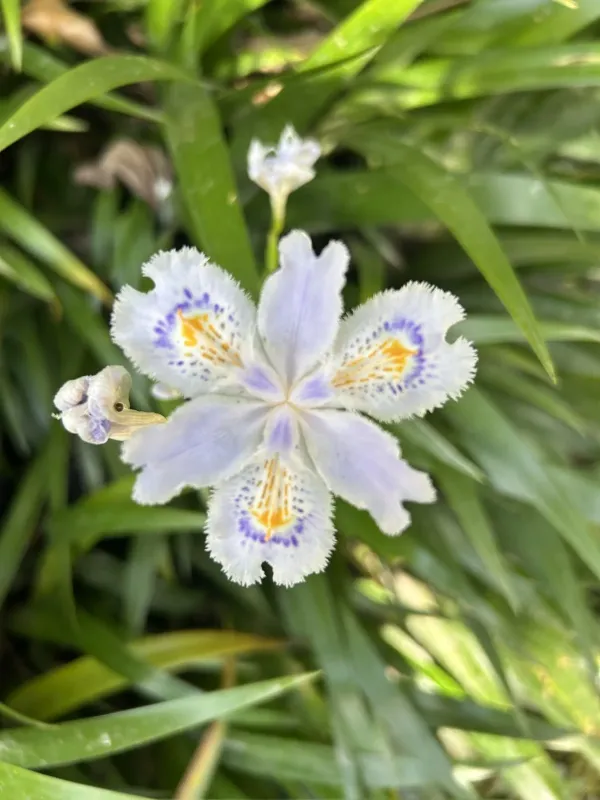
The Fringed iris (Iris japonica) belongs to the Iridaceae family. Native to China and Japan, this rhizomatous perennial thrives in cool, shady forest environments, often colonizing banks near streams and wet slopes.
The plant requires fertile, well-draining soil that is rich in organic matter. A slightly acidic to neutral pH level is ideal for healthy root development, ensuring the plant receives adequate nutrients throughout the season.
Climate requirements for Iris japonica focus on moderate temperatures. It is not highly frost-hardy, meaning it requires protection in colder regions or should be kept in greenhouses where winters are severe.
Shade is essential for this species. Unlike many other irises, this plant prefers dappled light or partial shade, as intense midday sun can cause the foliage to lose its deep green luster and suffer from dehydration.
For best results, gardeners should practice regular mulching to retain moisture in the soil. Consistent, moderate irrigation is necessary, though care must be taken not to waterlog the rhizomes, as this leads to decay.
Main diseases and pests
The Fringed iris is susceptible to various fungal diseases such as leaf spot and rhizome rot, especially when air circulation is poor or humidity levels remain consistently high throughout the growing season.
Common pests include aphids and slugs, which can damage the soft tissues of the leaves and flowers. Monitoring the plants during wet weather is crucial to prevent infestations of gastropods.
- Monitor for leaf discolouration regularly.
- Ensure proper spacing to avoid overcrowding.
- Apply fungicide sprays at the first sign of leaf spot.
Sanitation is key to managing threats; removing dead or diseased foliage in late autumn helps prevent the overwintering of pathogens that could affect the next year's growth cycle.
Root systems should be inspected during the division period to ensure they remain firm and free of decay, which is a common indicator of underlying health issues.