
Dutch iris
Iris hollandica
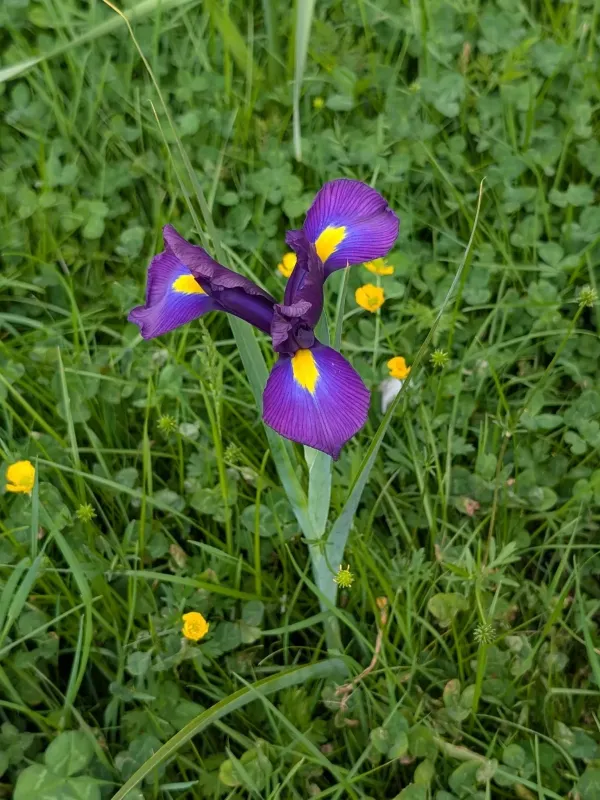
Description
Sowing dates
Dutch iris (Iris hollandica) is a group of hybrid bulbous plants in the Iridaceae family, developed for their excellent qualities as cut flowers. These plants are the result of crossing specific species native to Southern Europe and North Africa.
Planting dates vary significantly depending on the climate and whether the plants are grown in open fields or greenhouse facilities. In mild climates, bulbs are planted in the autumn to establish strong root systems before winter.
Commercial producers often use greenhouse tunnels to control the flowering time, enabling a steady supply of fresh flowers to the market throughout the season by adjusting planting intervals.
Proper bulb storage before planting is crucial; bulbs must be kept in cool, dry conditions to prevent premature sprouting and ensure that energy is directed toward flower development rather than foliage growth.
Spacing is typically determined by bulb size, with standard practices suggesting 10–15 cm between plants in rows to allow sufficient airflow, which helps mitigate moisture-related diseases.
Growing requirements
The primary requirement for Dutch iris is superior soil drainage. Excessive moisture, especially during the dormant period, is the leading cause of bulb rot and fungal infections.
Light, sandy loam soils with a neutral to slightly alkaline pH are ideal. These soil types warm up quickly in the spring, promoting early development and reducing the risk of waterlogging.
Iris hollandica requires full sun exposure to thrive. Shade, even for a few hours, can lead to leggy, weak stems and reduced flower size, which compromises the marketability of the cut flowers.
In colder regions, winter protection is essential. A layer of mulch or protective fabric helps stabilize soil temperatures and prevents freezing damage to the developing bulbs.
Consistent watering is necessary during the active growth stage, but irrigation should be significantly tapered off once flowering finishes to allow the bulbs to mature and enter dormancy properly.
Yield
Yield for Dutch iris is measured by the number of high-quality, straight-stemmed flower spikes produced per square meter, with expectations for professional growers usually ranging from 80% to 90% utilization.
High-quality, large-caliber bulbs are the most significant factor in achieving high yields, as they contain sufficient nutrient reserves to support strong, long-lasting flower stalks.
Modern fertility management, including fertigation systems, ensures that the plants receive a balanced supply of macro and micronutrients throughout their growth cycle, enhancing both stem length and bloom quality.
Standardization is key to profitability. Professional grading based on stem length and bud maturity ensures that the produce meets strict market requirements for wholesale distribution.
Following harvest, maintaining the health of the foliage is vital, as the plant continues to photosynthesize, storing energy for next year's bulb development and future yields.
Main diseases and pests
Fungal pathogens such as Fusarium and Penicillium represent the most significant threats to Dutch iris, particularly when storage conditions are damp or soil drainage is insufficient.
Viral infections, characterized by leaf mottling or flower deformities, are non-curable. Affected plants must be identified and removed immediately to prevent spread through mechanical handling or insect vectors.
Thrips are common pests that cause significant damage to buds and foliage. Their feeding activity not only ruins the aesthetic appeal of the flower but also provides entry points for bacteria.
Bulb mites and soil-borne insects can cause mechanical damage to the root system, making it susceptible to secondary infections; therefore, regular soil treatment and bulb disinfection are standard practices.
Implementing a strict crop rotation schedule, avoiding planting on the same site for at least three years, is the best preventative measure against soil-borne pathogens.
Harvesting
Harvesting is performed at the "colored bud" stage, where the petals are fully formed and showing distinct varietal color, but have not yet fully unfolded.
Stems should be cut with sanitized blades to prevent the transmission of pathogens between plants. Keeping tools clean is a fundamental practice in professional flower farming.
Immediately after cutting, stems are placed in cool water to undergo a cooling process. This lowers the field heat of the flowers, significantly increasing their vase life and durability during transport.
Packaging involves specialized climate-controlled conditions to manage humidity and temperature, ensuring that the flowers reach their destination in pristine condition.
At the end of the season, once the foliage begins to yellow and die back naturally, the bulbs are carefully lifted, cleaned, and stored in a cool, ventilated area until the next planting cycle.