
Douglas iris
Iris douglasiana
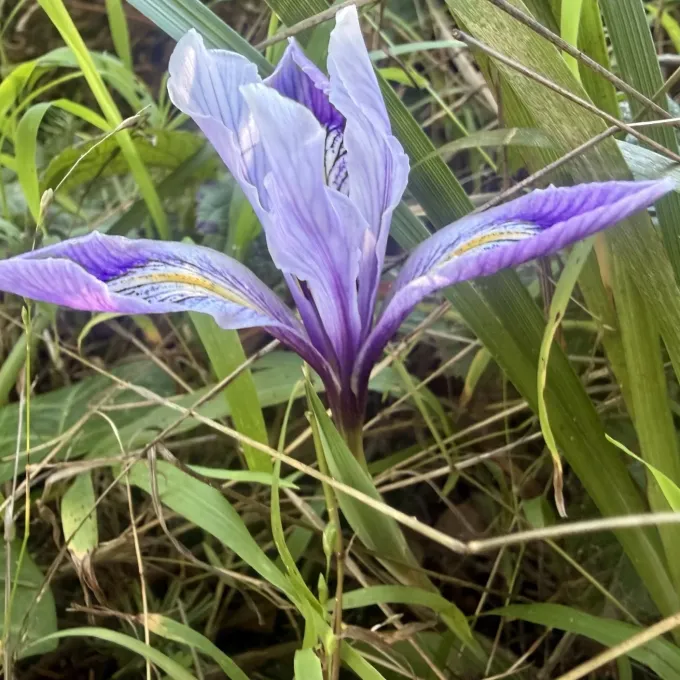
Description
Growing requirements
Douglas iris (Iris douglasiana) is a perennial rhizomatous herb that belongs to the Iridaceae family. Native to the coastal regions of the Pacific Northwest and California, this plant is well-adapted to maritime climates characterized by cool, wet winters and dry, mild summers.
Botanically, it is distinguished by its tough, evergreen, grass-like foliage that forms dense clumps. The stems support flowers that showcase a wide color palette, including shades of cream, yellow, blue, and deep purple, making it a popular choice for native plant gardens.
For successful cultivation, Douglas iris requires well-drained soil with a slightly acidic to neutral pH level. It thrives in soils rich in organic matter but will struggle if water accumulates around the rhizomes, leading to rot.
The plant prefers full sun to partial shade. While it is quite drought-tolerant once established, providing consistent, light moisture during the peak growing season ensures the best performance and a more prolific flowering display.
In landscaping, this species is highly valued for its year-round evergreen foliage and its ability to naturalize in garden borders. It is an excellent candidate for woodland settings, coastal landscapes, and rock gardens where minimal intervention is desired.
Main diseases and pests
The most common pests affecting Douglas iris are iris borers, which tunnel through the rhizomes and can weaken the entire plant. Regular inspection during the spring is necessary to catch and treat early infestations.
Fungal leaf spot (Heterosporium) is a prevalent disease, especially in areas with high humidity or poor air circulation. Removing and destroying affected foliage at the end of the season helps to reduce the inoculum levels for the following year.
Root rot is the most significant threat if the soil drainage is inadequate. Ensuring that the rhizomes are planted shallowly and in porous soil is the best cultural practice to prevent the development of anaerobic conditions.
Aphids and thrips can occasionally feed on the developing buds, causing stunted growth and disfigured blooms. If an infestation occurs, horticultural soaps or targeted insecticidal sprays may be applied to manage the population.
Garden hygiene is essential for the long-term health of Iris douglasiana. Clearing away debris and maintaining proper plant spacing prevents many of the common fungal diseases and pest problems associated with high-density gardening.