
Danford's iris
Iris danfordiae
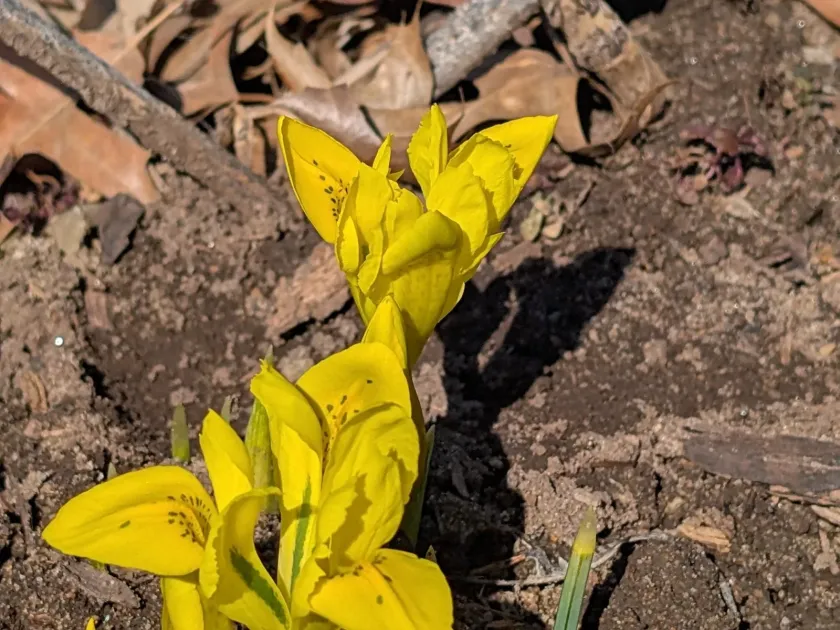
Description
Sowing dates
Planting of Iris danfordiae bulbs is performed during the autumn months, typically between September and October, to allow for rooting before soil freezing.
The bulbs should be planted at a depth of 5 to 10 centimeters, depending on the texture and drainage capacity of the planting site.
Maintain a spacing of at least 10 to 15 centimeters between individual bulbs to ensure adequate airflow and prevent overcrowding during the growing cycle.
Applying a light layer of mulch after planting helps maintain stable soil temperatures and prevents premature emergence during erratic winter weather.
In regions with harsh winters, additional protection with evergreen boughs or breathable fabric can shield the bulbs from deep ground freezing.
Growing requirements
Iris danfordiae is a perennial bulbous plant belonging to the Iridaceae family, native to the mountainous regions of Turkey.
The plant strictly requires sharp drainage; on clay-heavy soils, a base layer of horticultural grit is necessary to prevent bulb rot.
It thrives in full sun exposure, preferably in locations that receive early spring warmth and are protected from strong, drying winds.
The soil should be slightly alkaline or neutral, as acidic conditions can hinder the development of the root system and nutrient uptake.
While moisture is essential during the active spring growth phase, the bulbs require a dry, warm dormant period during the summer months.
Main diseases and pests
Fusarium wilt remains the most significant threat to Iris danfordiae, often triggered by excessive moisture or stagnant water in the soil profile.
Pests such as bulb mites and various soil-dwelling insects can cause physical damage, facilitating the entry of secondary fungal pathogens.
Bacterial soft rot can spread rapidly in crowded plantings, necessitating the immediate removal and destruction of affected specimens.
Thrips may infest the foliage during the growth phase, leading to stunted development and reduced energy storage for the following season.
Regular inspection and the use of appropriate chemical or biological controls are vital for maintaining a healthy iris patch.
Harvesting
Harvesting or lifting of the bulbs is performed once the foliage has completely yellowed and died back, marking the onset of the dormant phase.
Once lifted, bulbs should be gently cleaned of soil and air-dried in a shaded, well-ventilated area to prevent humidity-induced fungal growth.
Store the clean bulbs in a cool, dry place until the next planting season to ensure they remain viable and ready for the autumn cycle.
Periodic division of the bulb clumps, usually every three to four years, is recommended to rejuvenate the stand and maintain flower quality.
Selecting only firm, disease-free bulbs for replanting is a fundamental practice for ensuring vigorous growth and uniform blooming patterns.