
Boissier's iris
Iris boissieri
Description
Growing requirements
Boissier's iris (Iris boissieri) is a rare species of bulbous iris belonging to the Iridaceae family. This plant is indigenous to the mountainous regions of the northwestern Iberian Peninsula, specifically occurring in parts of Spain and Portugal.
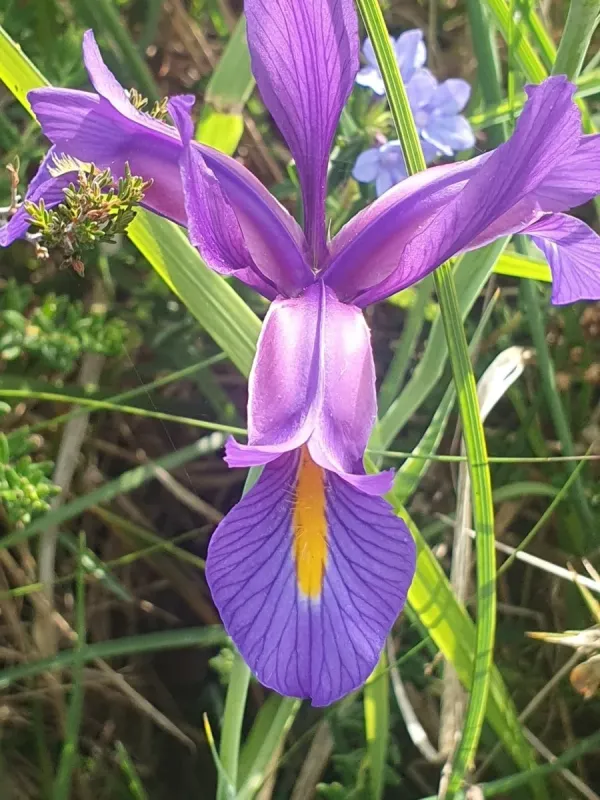
The plant is characterized by its narrow, channeled leaves and large, striking flowers that typically display deep purple petals with a distinct yellow ridge on the falls. It grows from a bulb and is a perennial herb known for its delicate aesthetic appeal.
Regarding soil requirements, this species thrives in well-drained, gritty, or sandy soils. In its natural mountain habitat, it is found on stony slopes, which necessitates a growing medium that prevents any water stagnation around the bulb to ensure healthy growth.
The climate requirements include plenty of sunlight during the active growth phase in the spring. As a Mediterranean-climate plant, it requires a dry summer dormancy period, during which the bulbs should be kept warm and relatively dry to prevent rotting.
The primary use of this iris is ornamental. It is highly valued by specialized gardeners and collectors for its rarity and beauty, often being cultivated in alpine rock gardens or cold frames where moisture levels can be strictly monitored and controlled.
Main diseases and pests
The most significant threats to Iris boissieri are fungal pathogens caused by improper drainage and excessive humidity. Diseases such as bulb rot are common if the plants are subjected to wet soil conditions for extended periods during their dormant or growing phases.
Pest threats include insects like aphids or bulb mites, which can weaken the plant or facilitate the spread of secondary viral infections. Management includes using clean, well-draining substrate and ensuring sufficient ventilation to maintain plant vigor throughout the season.