
Gladiolus venustus
Gladiolus venustus
Description
Sowing dates
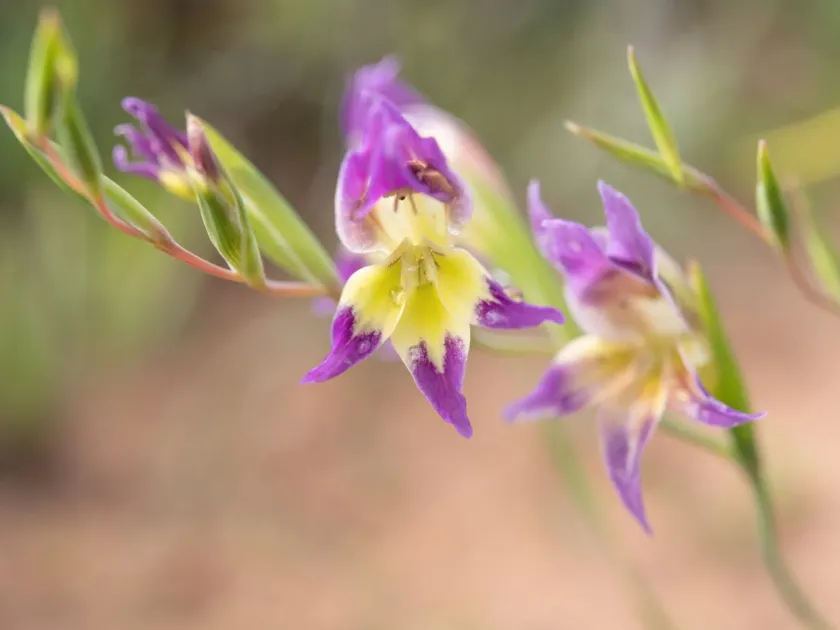
Gladiolus venustus is a species of flowering plant in the Iridaceae family, native to the winter rainfall regions of South Africa.
In temperate zones, bulbs should be planted in the spring after the danger of frost has passed and the soil has sufficiently warmed up.
Planting depth should be approximately three times the diameter of the bulb to ensure stability and proper moisture levels for the developing roots.
Space the bulbs about 15 to 20 centimeters apart to allow adequate airflow and sunlight penetration for each individual plant.
For container gardening, use a well-draining potting mix composed of peat, sand, and compost to prevent the bulbs from sitting in stagnant water.
Growing requirements
The plant thrives in full sunlight, which is necessary for the development of healthy, vibrant flower spikes and vigorous foliage growth.
Soil structure should be sandy or loamy with excellent drainage, as the species is highly susceptible to root and bulb rot in heavy, waterlogged clay soils.
Watering should be consistent throughout the growing season, increasing during the period when the flower spike is actively developing.
Fertilization with a balanced, low-nitrogen liquid fertilizer can support flower production without encouraging excessive leaf growth at the expense of blooms.
Temperature management is critical; Gladiolus venustus requires warmth during its growth phase and protection from freezing temperatures during winter.
Main diseases and pests
Fungal diseases, including Fusarium wilt and Sclerotinia, are the primary threats to the health and longevity of Gladiolus venustus bulbs.
Thrips are the most destructive insect pests, damaging the foliage and causing streaks or malformation in the petals of the emerging flowers.
Integrated pest management, including crop rotation and the use of insecticidal soaps, is highly recommended to keep populations in check.
Regular monitoring of the plants allows for the early detection of bacterial or viral infections, which can spread rapidly in crowded conditions.
Always inspect new bulbs before planting to ensure they are firm and free of any signs of rot, decay, or hidden pest activity.
Harvesting
Bulbs should be harvested in late autumn after the foliage has naturally turned yellow and died back, signaling the completion of the nutrient storage cycle.
Use a garden fork to lift the bulbs carefully from the soil, taking care not to pierce the outer skins or cause mechanical damage to the bulb tissue.
After harvesting, gently remove excess soil and trim the stems back, leaving about 2-3 centimeters above the bulb surface for proper curing.
Curing is essential: dry the bulbs in a warm, airy, and shaded location for about two weeks until the old basal plate dries completely.
Store the cured bulbs in a cool, dark, and dry environment with adequate ventilation to maintain their viability until the next planting season.