
Waved gladiolus
Gladiolus undulatus
Description
Growing requirements
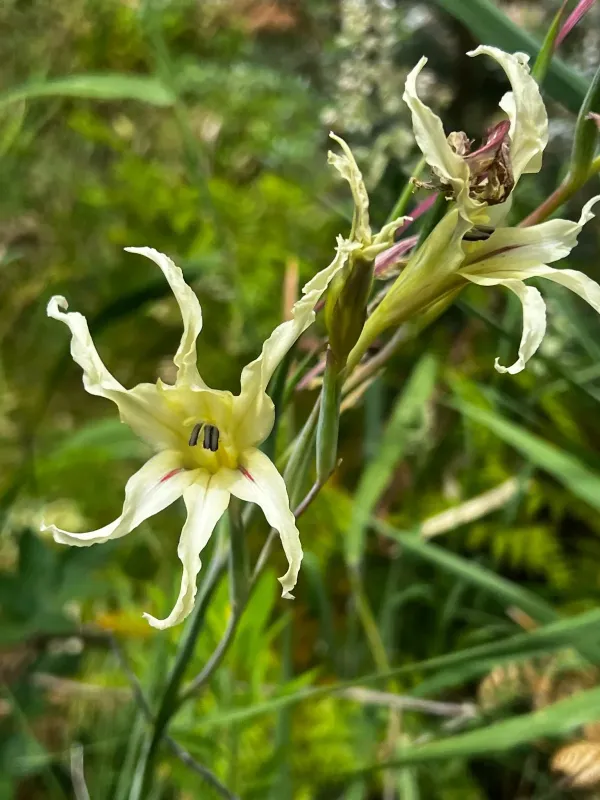
The waved gladiolus (Gladiolus undulatus) is a perennial bulbous plant belonging to the Iridaceae family. It is distinct for its elegant, funnel-shaped flowers characterized by wavy perianth segments, typically appearing in shades of white, cream, or pale green.
The species is native to the Cape region of South Africa, where it thrives in specific ecological niches. It is accustomed to the Mediterranean climate, which means it requires a dormant period after its growth cycle concludes in the late summer.
To successfully cultivate this species, it is essential to provide full sun exposure and soil that offers excellent drainage. A sandy or loamy soil enriched with compost is ideal for supporting both the root system and the tall flower spikes.
Watering management is critical during the active growing season. The soil should remain consistently moist but never waterlogged. As the plant approaches its senescence, watering must be significantly reduced to prepare the corm for dormancy.
In regions where temperatures drop below freezing, gardeners must lift the corms in autumn. They should be stored in a cool, dry, and well-ventilated location at temperatures ranging from 5 to 10 degrees Celsius to prevent premature sprouting or rotting.
Main diseases and pests
Common diseases affecting this species include Fusarium wilt and various bacterial soft rots. These are often exacerbated by high humidity and poor storage conditions during the winter dormancy period.
Thrips are the most significant insect pest for gladiolus, as they puncture leaves and flowers, leaving silvery streaks and causing bud malformation. Integrated pest management, including regular inspection and occasional treatment, is often necessary to maintain plant vigor.