
Gladiolus scullyi
Gladiolus scullyi
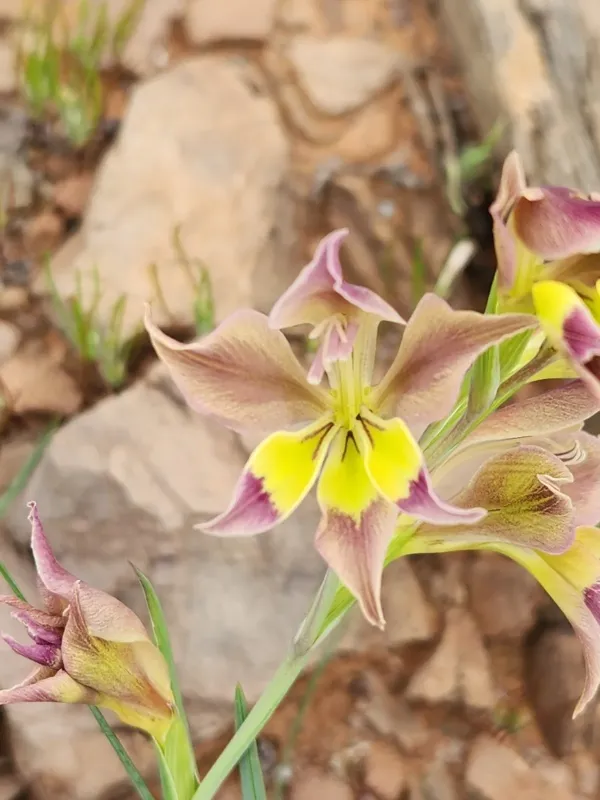
Description
Growing requirements
Gladiolus scullyi is a distinct perennial bulbous plant belonging to the Iridaceae family. Native to the southern regions of South Africa, it is adapted to habitats characterized by distinct wet winters and dry, hot summers.
The plant thrives in well-draining, sandy, or stony substrates that prevent water accumulation around the corm. In cultivation, ensuring proper soil aeration is the most critical factor for the longevity and health of the bulb.
This species requires full sun exposure to reach its full potential during the flowering season. Inadequate light levels often result in weak, leggy stems that fail to support the inflorescence and may lead to reduced bulb vitality.
Regarding climate, Gladiolus scullyi is not frost-tolerant and requires protection in regions with harsh winter conditions. It is best suited for greenhouse cultivation or container gardening where the temperature can be controlled.
Botanically, the plant produces narrow, lanceolate leaves and a single or branched spike of blooms. The growth cycle is strictly tied to environmental triggers, necessitating careful monitoring of the moisture levels during the active season.
Main diseases and pests
The primary threats to Gladiolus scullyi include various fungal pathogens such as Fusarium and Botrytis. These diseases are triggered by poor drainage or high humidity around the corm, often leading to rapid tissue decay.
Thrips are the most significant insect pest for this genus. These small insects feed on foliage and floral tissues, leaving discolored patches and stunted growth. Regular inspection and appropriate systemic insecticides are required for effective control.
Spider mites represent a secondary threat, particularly when the plants are maintained in enclosed environments with low humidity. Their feeding results in yellowing of the leaves and can significantly impact the plant's ability to photosynthesize.
Soil-borne larvae and various nematodes can cause structural damage to the corm, creating entry points for secondary bacterial infections. Soil sterilization prior to planting is a recommended practice in professional horticulture.
Prevention remains the most effective management strategy. This includes maintaining proper spacing between plants to ensure airflow, avoiding overhead watering, and strictly adhering to seasonal dormancy requirements for the corms.