
Gladiolus crassifolius
Gladiolus crassifolius
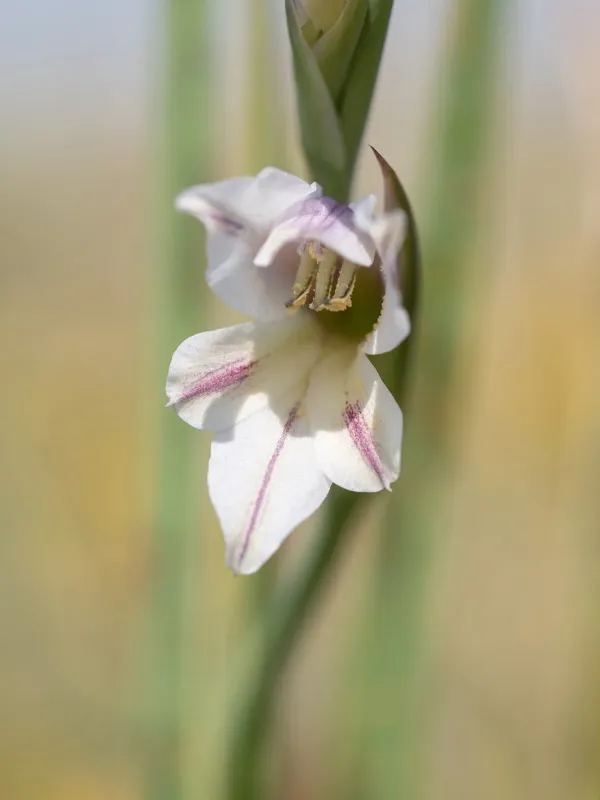
Description
Sowing dates
Gladiolus crassifolius is a perennial herb belonging to the Iridaceae family. Native to the southern regions of Africa, this species is appreciated for its architectural foliage and elegant flowering stems.
Planting corms is usually performed in the spring, once the soil has warmed up to at least 10 degrees Celsius. Proper timing ensures the plant initiates strong root development before the heat of summer sets in.
Seeds can be sown in controlled environments during late winter or early spring. Note that plants grown from seeds will take several years to reach maturity and produce their first flowering stalk.
Choosing the right planting depth is essential for healthy growth. In lighter, sandy soils, corms should be planted deeper to provide stability, whereas in heavier clay soils, a shallower depth prevents rot.
The use of mesh planting baskets is recommended for easier management. This technique simplifies the harvest process in the fall and protects the corms from burrowing pests during the growing season.
Growing requirements
This species thrives in sunny locations with well-drained soil. It is highly sensitive to waterlogged conditions, which can quickly cause root and corm decay, common in many gladiolus species.
Soil should be rich in organic matter with a neutral to slightly acidic pH level. Adding compost or well-rotted manure before planting will provide the necessary nutrients for vigorous leaf growth.
Regular irrigation is vital during the budding stage to ensure the stems develop straight and strong. However, it is important to water the soil rather than the foliage to prevent fungal issues.
Gladiolus crassifolius benefits from a balanced fertilization program. A nitrogen-rich fertilizer supports early growth, while a phosphorus and potassium-rich blend is better during the flowering phase.
Protection from strong winds is advisable in exposed garden areas. Supporting taller stalks with stakes is a common practice to ensure that the beauty of the inflorescence is not damaged by weather.
Main diseases and pests
Fungal diseases such as Fusarium wilt and Botrytis are the primary threats to Gladiolus crassifolius. These pathogens often thrive in overly damp conditions and poorly ventilated storage areas.
Thrips are the most destructive insect pests for this crop. They infest leaves and buds, causing streaks and deformed flowers, which can ruin the ornamental value of the entire planting.
Integrated pest management is crucial for keeping a collection healthy. This includes the use of systemic insecticides and the removal of any infested plant parts as soon as symptoms are detected.
Crop rotation is a standard agricultural practice used to break the life cycle of soil-borne pests. Returning to the same site after 3–4 years significantly reduces the pressure from diseases.
Disinfecting the corms before planting is a preventive measure that pays off. Simple treatments can eradicate pathogens on the surface, ensuring a clean start for the new vegetation cycle.
Harvesting
Corms are harvested after the foliage has naturally faded and yellowed in the fall. This allows the plant to transfer energy reserves back into the corm for the following year's growth.
Once lifted from the soil, the stalks are trimmed close to the corm. Careful cleaning of the soil and debris is necessary to facilitate proper drying and prevent potential rot during storage.
Curing the corms in a dry, shaded, and well-ventilated area for two weeks is a critical step. This ensures that the outer tunics are dry and protective against moisture loss.
Storage should take place in a cool, dark environment where the temperature remains stable between 3 and 6 degrees Celsius. Proper airflow prevents the buildup of humidity in the storage crates.
Regular inspection of the stored corms during the winter months allows for the early removal of any damaged or diseased samples. This simple task preserves the quality of the planting stock.