
Gladiolus alatus
Gladiolus alatus
Description
Sowing dates
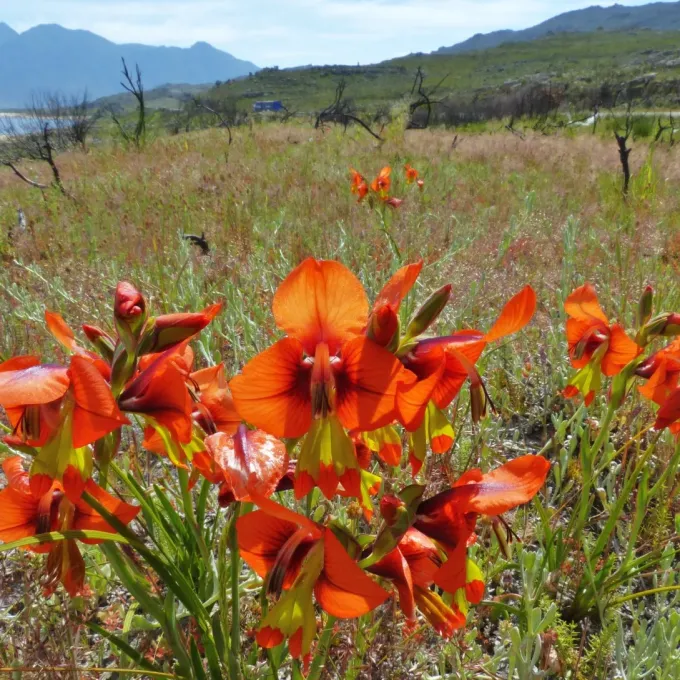
Gladiolus alatus, commonly known as the winged gladiolus, belongs to the Iridaceae family and is native to the winter-rainfall regions of South Africa. It is a distinct species prized for its unique, colorful, and often fragrant flowers that bloom in late spring.
Planting typically occurs in autumn or early spring depending on the specific climate zone. In regions with freezing winters, the bulbs should be planted in pots or lifted before the first frost, as the species is not frost-hardy.
The bulbs should be planted at a depth of about 5 to 8 centimeters in well-draining soil. Providing a layer of coarse sand at the bottom of the planting hole helps prevent moisture buildup around the bulb base, reducing the risk of rot.
Adequate spacing is crucial to ensure proper air circulation, with at least 15 centimeters between individual corms. This density supports healthy growth while maintaining the visual appeal of the planting bed.
Once the blooming cycle concludes, the plant enters a natural senescence phase. At this stage, the foliage begins to yellow, indicating that the corm is storing energy for the next season; watering should be gradually reduced during this period.
Growing requirements
This species thrives in a Mediterranean-style climate, characterized by cool, wet winters and warm, dry summers. It requires full sunlight to bloom successfully and develop its characteristic vibrant color palette.
Soil requirements for Gladiolus alatus are specific: it demands a loose, sandy, and well-draining soil medium. Heavy clay soils that retain moisture are generally unsuitable unless significantly amended with organic matter and drainage materials.
Water management is the most critical aspect of care. The soil should remain consistently moist during the active growing season but must be kept almost entirely dry once the foliage starts to die back after flowering.
Temperature control is essential; in its native habitat, it experiences mild temperatures. If grown in cold regions, cultivation in containers is often the most practical approach to protect the corms from extreme frost during winter storage.
Fertilization should be handled with care. A balanced, low-concentration liquid fertilizer can be applied during the early vegetative stage, but excessive nitrogen should be avoided to prevent weak, floppy stems and poor bulb development.
Main diseases and pests
Fungal pathogens represent the most significant threat to the health of Gladiolus alatus. Fusarium wilt and various forms of botrytis rot are common in conditions where drainage is poor or humidity levels remain high for extended periods.
Thrips are the primary insect pests affecting this crop. They infest the foliage and developing buds, leading to unsightly scarring and distorted flower spikes, which effectively renders the plant unusable for ornamental purposes.
Bulb mites can be highly destructive, especially during storage. These microscopic pests thrive in warm, humid conditions, causing the corms to hollow out and eventually collapse; maintaining cool, dry storage conditions is the best defense.
Slugs and snails can cause mechanical damage to emerging shoots in the early spring. Regular monitoring and the use of physical barriers or organic baits are recommended to protect the young plants during their most vulnerable growth stages.
Viral infections transmitted by aphids are often permanent once they manifest as mosaic patterns or color breaks. Strict sanitation, including the immediate removal and destruction of infected plants, is the only reliable method for control.