
Saffron crocus
Crocus sativus L.
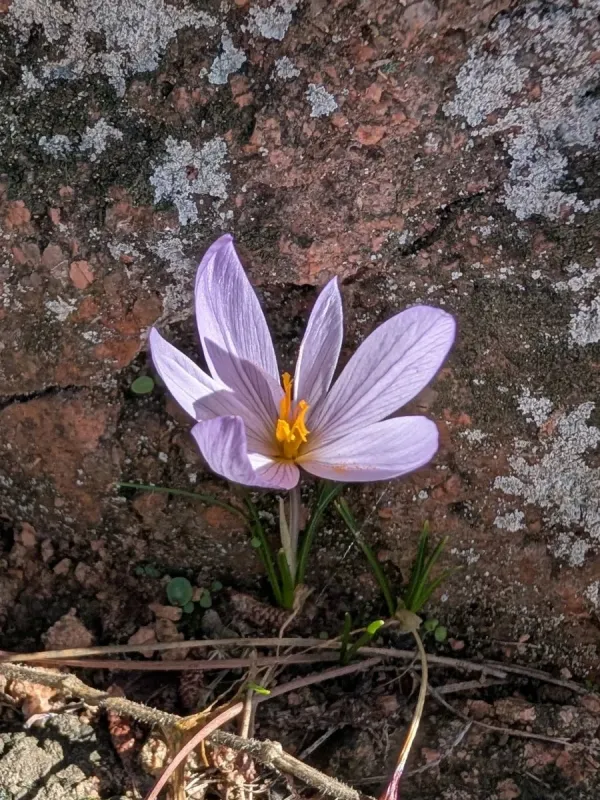
Description
Sowing dates
Saffron crocus is a sterile triploid plant that does not produce viable seeds, necessitating vegetative propagation through its corms.
The optimal planting time occurs in late summer to early autumn, usually from August to September, allowing corms to establish before the onset of cold weather.
Corms are planted at a depth of 10 to 15 centimeters, ensuring adequate spacing between plants to prevent competition and facilitate mechanical or manual care.
Selecting a site with well-drained soil is crucial, as the primary objective is to maintain a healthy root system during the initial growth phase.
Successful establishment depends on using high-quality, disease-free corms that are consistent in size to ensure uniform growth and flowering patterns.
Growing requirements
This member of the Iridaceae family thrives in Mediterranean-style climates, characterized by warm, dry summers and mild, wet winters.
Soil requirements include excellent drainage and high organic content, as the plant is highly susceptible to root rot in waterlogged conditions.
It prefers a neutral to slightly alkaline pH and does not tolerate soils that are prone to compaction or surface crusting after rainfall.
Full sun exposure is mandatory; even partial shade significantly impacts the flower production and the overall quality of the stigmas.
While the plant is hardy, it requires a clear dormant phase during the summer heat, which is essential for the maturation of the corms.
Yield
The economic value of saffron is determined by the weight of the harvested dried stigmas, which are among the most expensive spices in the world.
Yields are low during the first year after planting but typically reach their peak in the second and third years of cultivation.
Farmers can expect an average yield of 4 to 6 kilograms of dried saffron per hectare, depending on soil fertility and plantation age.
The labor-intensive nature of the harvest is the primary factor in the high production costs, as it requires manual collection of hundreds of thousands of flowers.
Maintaining high yields over several years involves proper soil management and regular application of organic matter to sustain the vigor of the corms.
Main diseases and pests
Fungal pathogens such as Fusarium oxysporum are a significant threat, often induced by poor soil drainage and high humidity levels.
Pests such as rodents can cause extensive damage by consuming corms in the ground, particularly during periods of food scarcity in winter.
Nematodes and bulb mites are also recognized as common threats that can weaken plants and reduce the overall health of the saffron plantation.
Integrated pest management strategies, including the use of certified corm stock, are essential for maintaining the longevity of the spice fields.
Early identification of symptomatic plants is critical, as infected corms should be removed and destroyed to prevent the spread of soil-borne pathogens.
Harvesting
Harvesting is an intricate manual process that occurs during the early morning hours, just as the flowers bloom to maximize quality.
The time window for harvesting is very narrow, typically lasting only a few weeks, which requires efficient management of labor resources.
Stigmas must be carefully extracted from the petals immediately after harvest to preserve the delicate chemical composition that gives saffron its color and aroma.
Drying is the final critical step, where temperature control is essential to stabilize the product and ensure long-term shelf life without losing potency.
Properly cured and stored in airtight, dark containers, saffron retains its unique organoleptic properties for extended periods without degradation.