
Korolkow's crocus
Crocus korolkowii Maw & Regel
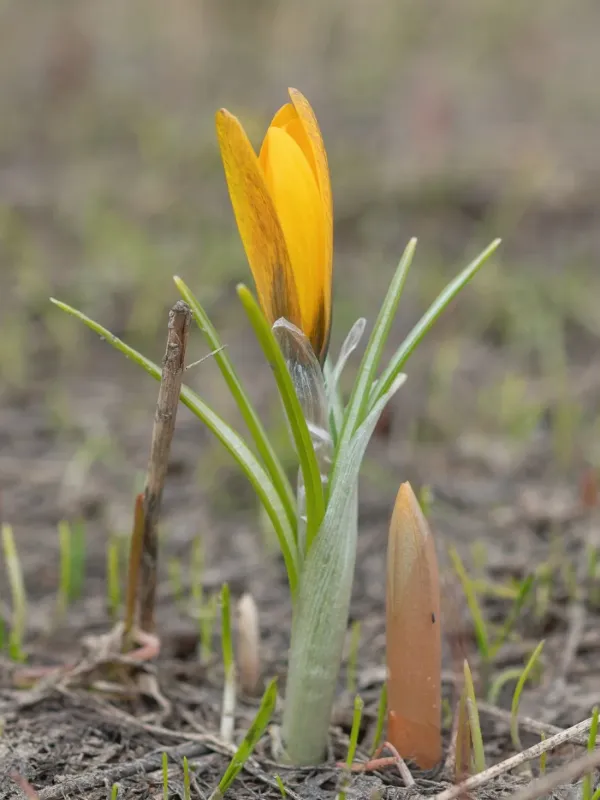
Description
Sowing dates
Korolkow's crocus belongs to the Iridaceae family and is recognized as one of the most resilient and early-blooming species of the genus.
Propagation is primarily achieved through daughter corms, which should be planted during the late summer dormancy period.
The planting depth should range from 5 to 8 centimeters, depending on the physical properties and drainage capacity of the garden soil.
A spacing of approximately 10 centimeters between corms is recommended to allow for healthy development and adequate nutrient access.
Before planting, it is highly recommended to treat the corms with fungicides to protect against soil-borne pathogens during the rooting phase.
Growing requirements
Native to the mountain regions of Central Asia, this species thrives in well-lit areas with protection from strong, cold wind gusts.
The soil must be well-drained and friable, as stagnant water is the primary cause of corm rot during the plant's inactive period.
Korolkow's crocus is frost-hardy, but in regions with harsh winters, applying a light layer of mulch will help regulate soil temperature.
Watering should be managed carefully, providing moisture during the active spring growth phase while keeping the soil dry in summer.
Fertilization with a balanced, low-nitrogen formula can be applied early in the spring to encourage vigorous flowering and corm production.
Main diseases and pests
Rodents such as mice and voles represent the most significant threat to the corms, often consuming them during the winter months.
Fungal diseases, including Fusarium wilt and soft rot, can emerge if the soil remains waterlogged or if ventilation is insufficient.
Aphids and spider mites are common pests that may infest the foliage, requiring systemic insecticides if the infestation levels become critical.
Preventive measures include planting in areas with optimal airflow and strictly controlling soil moisture levels throughout the year.
Rotating planting sites every few years is an essential horticultural practice to minimize the build-up of specific soil pathogens.
Harvesting
Corms should be harvested after the foliage has fully withered, ensuring the plant has completed its cycle of nutrient storage.
Post-harvest, the corms need to be dried in a shaded, well-ventilated area to prevent decay and ensure long-term storage success.
Cleaning the corms of old tunics and discarding any damaged or diseased specimens is crucial for maintaining a healthy collection.
Storage should be performed in a cool, dark, and dry environment to preserve the viability of the planting material until the next season.
Regular division of the corm clusters is recommended every 3-4 years to maintain the vigor and aesthetic appeal of the flower display.