
Carpetanus crocus
Crocus carpetanus Boiss. & Reut.
Description
Growing requirements
Crocus carpetanus is a perennial cormous plant belonging to the Iridaceae family, naturally occurring in the high-altitude mountain ranges of the Iberian Peninsula. It is highly adapted to rocky, well-drained habitats with specific microclimatic conditions.
The plant thrives in mineral-rich, stony, or sandy soils that allow for rapid drainage. It is essential to avoid sites prone to waterlogging, as the corms are highly susceptible to rot during the dormant summer period.
Regarding climate, this species requires full sun exposure to thrive. Its high-altitude origin means it is accustomed to strong seasonal temperature fluctuations and requires cold dormancy to initiate successful spring flowering.
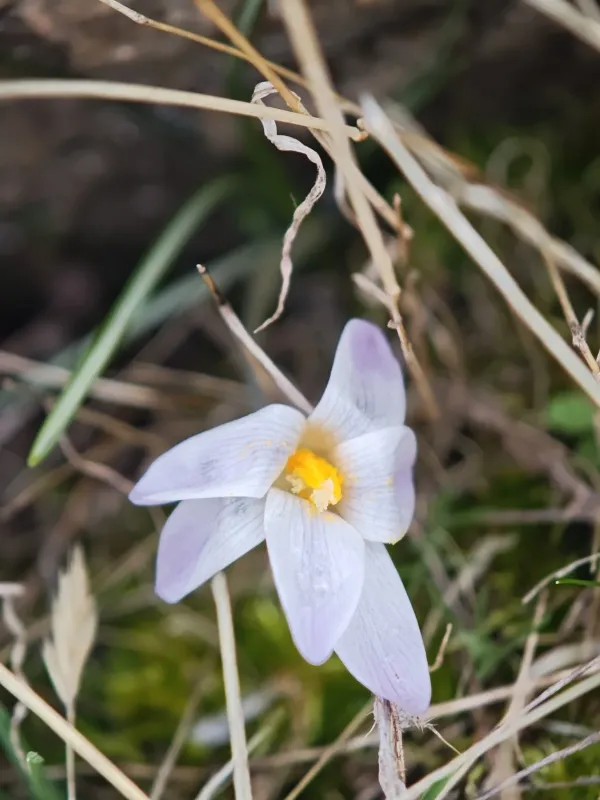
Botanical features include narrow, upright leaves and delicate flowers typically appearing in various shades of pale lilac or white. The petals often feature darker longitudinal veins that serve as a distinctive visual trait.
Successful cultivation involves maintaining a strict irrigation schedule that mimics its native Mediterranean high-mountain climate, providing moisture during active growth and dryness during the summer dormancy.
Main diseases and pests
Crocus carpetanus is prone to various fungal infections, primarily caused by excessive soil moisture, which can lead to basal rot and crown decay, significantly reducing plant population density.
Pest damage, particularly from aphids and bulb mites, can weaken the plant during the early spring growth phase, making it less likely to produce viable seeds or offset corms.
Small rodents and voles pose a constant threat, as they frequently dig up and consume the nutrient-rich corms, which can lead to the total loss of a planting site if not managed correctly.
In humid environments, leaf spotting fungi may manifest, reducing the photosynthetic capacity of the foliage and ultimately exhausting the corm's energy reserves for the following season.
Implementing a proper drainage system and practicing crop rotation, combined with the use of appropriate fungicides, is vital for maintaining healthy stands of this alpine species.