
Crocus versicolor
Crocus versicolor
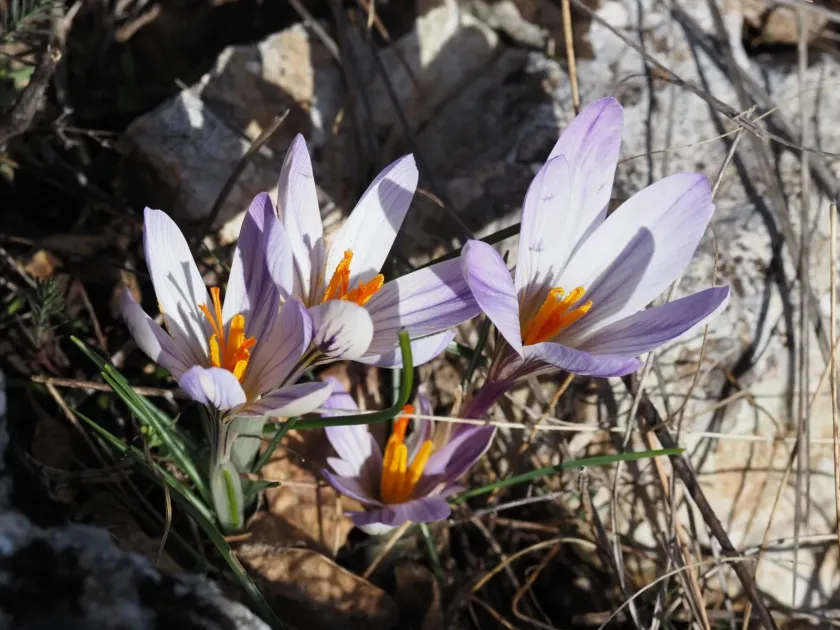
Description
Sowing dates
Crocus versicolor, a member of the Iridaceae family, propagates primarily through corms produced annually. The optimal time for planting in open ground is late summer or early autumn, at least 3–4 weeks before the first hard frosts, allowing the roots to establish.
When propagating from seeds, sowing is performed in prepared containers during the autumn, ensuring a stratification period under cool conditions. It is important to note that plants grown from seeds will only flower after 3–4 years, so this method is mostly reserved for breeding purposes.
Corms should be planted at a depth of 5–10 cm depending on the soil structure: shallower in heavy soils and deeper in light, sandy soils. When planting in masses, a spacing of 5 to 10 cm is maintained to ensure adequate air circulation and prevent overcrowding.
After planting, it is recommended to mulch the area to retain moisture and prevent the soil from freezing too rapidly. In regions with harsh winters, additional protection with evergreen boughs or dry leaves is a necessary agronomic practice for winter survival.
For quality blooms, it is essential to avoid waterlogging during the dormancy period of the corms. The planting material must be healthy, free of mechanical damage, and showing no signs of fungal infections, which is the key to successful root development.
Growing requirements
Crocus versicolor is native to southeastern France and northwestern Italy, thus requiring conditions similar to its natural Mediterranean habitat. The crop prefers well-lit, sunny areas, as buds may fail to open fully in shaded or low-light conditions.
The soil for this crop must be well-drained, light, and moderately fertile. The plant is highly sensitive to water stagnation, which quickly leads to corm rot, making the creation of a drainage layer from sand or gravel essential on heavy clay soils.
A moderate temperature regime is preferred; the crocus handles short-term spring temperature fluctuations well. The optimal soil pH is neutral or slightly alkaline, which facilitates better nutrient uptake from the substrate.
During the active growth phase, the crop requires regular but moderate irrigation. During the flowering stage, it is crucial to ensure that the soil surface does not dry out completely, while avoiding water saturation that can compromise the ornamental quality of the perianth.
The crop responds well to the application of mineral fertilizers with a low nitrogen content. An excess of nitrogen compounds can provoke the development of fungal diseases and excessive vegetative growth at the expense of flower development and bulb health.
Main diseases and pests
The primary pests for Crocus versicolor are rodents, such as mice and voles, which readily consume the succulent corms. To protect the plantings, it is recommended to use specialized hardware cloth or plant the corms in protective wire baskets.
Among insect pests, thrips and aphids pose a danger, as they damage the foliage and weaken the plant. In cases of severe infestation, treatment with systemic insecticides approved for use in ornamental gardening should be implemented.
Gray mold (Botrytis) is a common fungal disease that affects plant tissues under conditions of high humidity and poor ventilation. For prevention, it is important to follow irrigation schedules strictly and avoid overly dense plantings.
Fusarium wilt also poses a serious threat, manifesting as yellowing and wilting of the above-ground parts. Infected specimens must be removed and destroyed immediately, and the soil at the planting site should be treated with appropriate fungicides.
Prophylaxis against viral diseases, which cause flower deformation and light-colored streaks, involves controlling insect vectors and adhering to strict sanitary standards when dividing or handling corms.
Harvesting
Harvesting of corms is conducted after the total yellowing and decay of the above-ground parts, which usually occurs in early summer. During this period, the plant enters a state of dormancy, and nutrients are fully translocated from the leaves to the corm.
Corms extracted from the soil must be cleaned of old tunics and soil residues. This procedure should be performed carefully to avoid damaging the basal plate and root initials, which are common entry points for pathogens.
A mandatory step is drying the planting material in a well-ventilated area, protected from direct sunlight, at a temperature of approximately 20–25 degrees Celsius. This promotes the proper formation of protective scales and significantly reduces the risk of rot.
After drying, the corms are sorted by size, discarding any specimens with signs of mechanical damage or pest infestation. High-quality selection of planting material directly influences the intensity and uniformity of flowering in the next season.
Storage should be carried out in dry, cool, and well-ventilated rooms until autumn planting. Regular inspection of the corms during storage allows for the early detection and isolation of diseased units, preventing the loss of the entire batch.