
Crocus scharojanii
Crocus scharojanii
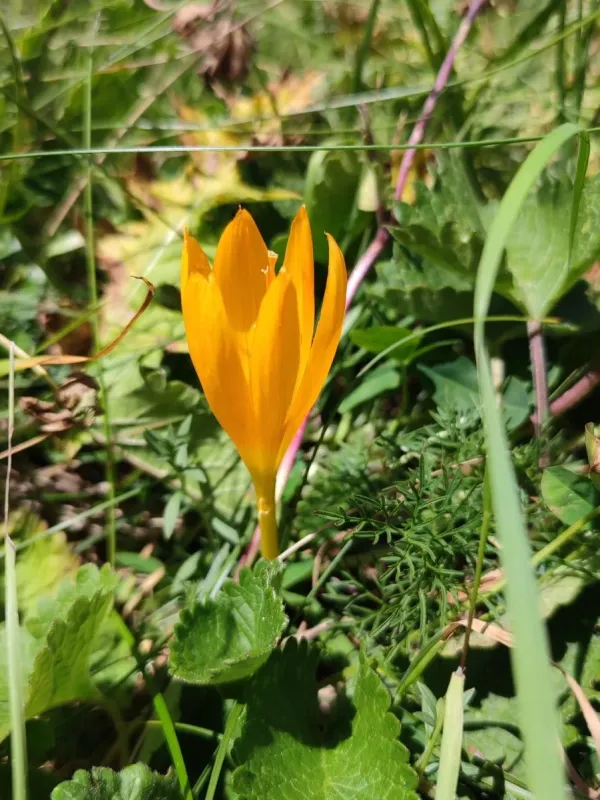
Description
Sowing dates
Crocus scharojanii is a unique species of herbaceous corm-bearing plants belonging to the Iridaceae family. In natural conditions, this species displays a specific life cycle characteristic of autumn-flowering ephemeroids, requiring precise planting timing to ensure successful establishment.
The optimal time for planting corms in open ground is late summer or early autumn, approximately one month before the expected flowering period. The planting depth should be between 5 and 8 centimeters to provide the plant with a stable temperature regime within the soil horizon.
When propagating from seeds, sowing is performed immediately after collection in well-drained substrates. It is important to consider that the period from sowing seeds to obtaining a mature flowering plant can take from three to five years of active growth.
The selection of a planting site should focus on areas that are well-lit but protected from intense midday heat. The plant does not tolerate waterlogging, so in heavy soils, it is necessary to provide a gravel layer as a drainage cushion beneath each corm.
Maintaining a distance of 10–15 centimeters between plants during planting helps avoid overcrowding. This ensures quality air circulation, which is critical for preventing the development of fungal pathogens under autumn humidity conditions.
Growing requirements
This crop has high demands regarding soil quality, preferring light, permeable loams or sandy soils with a neutral to slightly acidic pH. A high humus content in the soil layer positively affects the rate of corm division and plant vigor.
The climatic preferences of Crocus scharojanii are linked to the conditions of the Caucasus highlands, its native range. The plant requires significant temperature fluctuations and a summer dormancy period, during which the soil must remain sufficiently dry and well-warmed.
For successful cultivation in temperate climates, it is essential to provide protection from excessive winter moisture. In regions with harsh, snowless winters, light mulching of the area with dry peat or wood chips is recommended to prevent frost damage to the corms.
The crop is relatively drought-tolerant; however, during the active growing season (autumn), moderate watering is necessary if there is a deficit of rainfall. It is crucial to avoid waterlogged conditions, as this immediately leads to root rot and corm failure.
Fertilization should be minimal and strictly measured. It is recommended to use well-rotted compost during soil preparation, avoiding nitrogen excess, which promotes weak vegetative growth and decreases resistance to various diseases.
Main diseases and pests
The greatest danger for Crocus scharojanii is posed by rot of various etiologies caused by excess moisture. Fusarium and Sclerotinia are typical diseases that affect the base of the corm, causing softening and the subsequent death of the entire above-ground part.
Viral diseases, manifesting as color breaking in petals or necrotic leaf spots, represent a critical threat to collections. Since no specific cure exists, all affected specimens must be immediately removed and destroyed to prevent spreading.
Among pests, rodents cause the most damage by feeding on juicy corms during the winter dormancy period. To protect plantings, the use of protective wire mesh or planting in specialized perforated containers is recommended to restrict pest access.
There is also a high risk of plant damage by insects such as wireworms or onion flies. Preventative measures include treating planting material with systemic fungicides and insecticides before placing the corms into the soil.
Regular phytosanitary inspection of plantings allows for the early detection and localization of infection foci. It is recommended to follow crop rotation rules and avoid returning the species to the same location for at least 4–5 years after removing previous plants.
Harvesting
Harvesting of corms is carried out exclusively during the plant's full dormancy period, which occurs after the dieback of the above-ground part. In typical climatic conditions, this corresponds to mid-summer when soil moisture levels naturally decrease.
Dug-up corms must be cleaned of soil residues, old scales, and damaged parts. It is important to perform this cleaning carefully to avoid mechanical damage, which can serve as entry points for various infections and pathogens.
Drying is a critical stage that determines the long-term preservation of the material. The corms should be placed in a shaded, well-ventilated area at a temperature of 20–25 degrees Celsius for a period of 7 to 10 days.
For long-term storage, only firm, healthy corms without signs of rot or deformation should be selected. Storage is carried out in paper bags or wooden boxes with good ventilation at stable room temperature, away from direct sunlight.
Regular inspection of stored material allows for the timely identification of degrading units. If a corm begins to lose turgor or develops an abnormal color, it should be immediately removed from the batch to prevent the contamination of the healthy stock.