
Mathew's crocus
Crocus mathewii
Description
Growing requirements
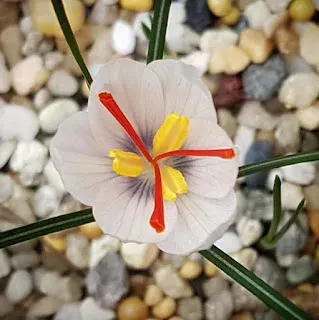
Mathew's crocus (Crocus mathewii) is a rare botanical species belonging to the Iridaceae family. Native to the Taurus Mountains in Turkey, it is highly sought after by alpine plant enthusiasts for its distinct white to pale blue petals and unique dark, violet-blotched centers.
In terms of soil requirements, this species demands excellent drainage, which is typical for its limestone-rich habitat. Growers should use a gritty mix of loam, sand, and stone chips to prevent the bulb from rotting during the dormant summer period.
This species thrives in a climate that provides a distinct summer dormancy with high temperatures and low moisture. In cultivation, many gardeners grow it in pots or alpine houses to strictly control the moisture levels during these vital months.
Sun exposure is critical for the development of healthy corms and flower production. It requires a bright, airy environment where sunlight can penetrate the soil surface, simulating the natural open slopes of its native mountain ranges.
The growth cycle begins in late autumn when the plant flowers, followed by foliage production. The foliage remains through the winter and early spring, after which it naturally withers, marking the beginning of the crucial summer dry cycle.
Main diseases and pests
The most significant threat to Crocus mathewii is fungal pathogens, specifically those causing basal rot and penicillium mold, which are exacerbated by damp, poorly ventilated soil conditions during dormancy.
Pests such as bulb mites and aphids pose a risk to the health of the plant. Mites, in particular, can decimate a bulb collection if not detected early, leading to stunted growth or total plant failure.
Small mammals, including voles and mice, find the corms to be an attractive food source during the winter months, necessitating physical barriers for protection.
Maintaining a strict dry regimen during the summer is the best defense against fungal decay. If the soil remains moist while the plant is dormant, the corms are extremely susceptible to rapid death.
Regular inspection of the foliage for signs of pests or wilting is essential, and any infected material should be removed and destroyed to prevent the spread of diseases within the planting area.