
Yellow crocus
Crocus luteus
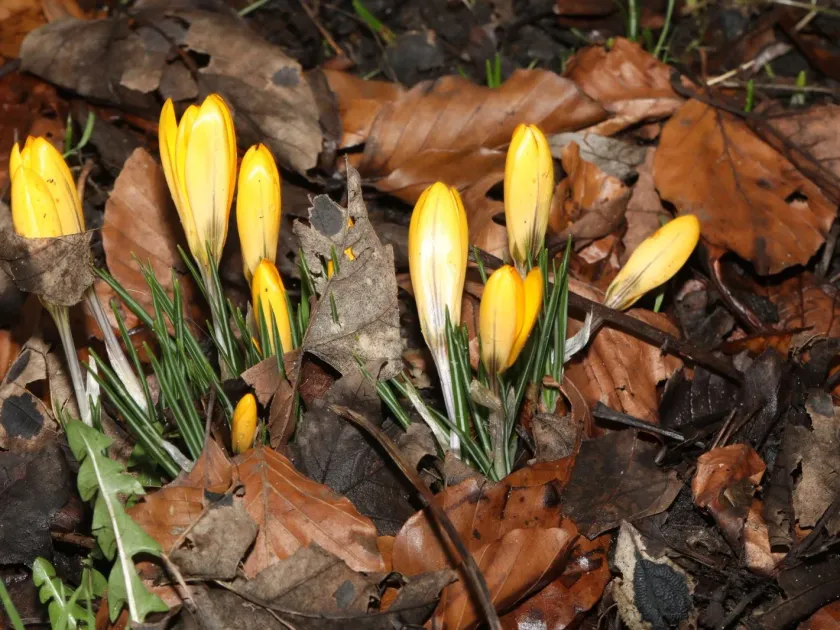
Description
Sowing dates
Yellow crocus (Crocus luteus) is a bulbous herbaceous perennial plant belonging to the Iridaceae family. The agrotechnical cycle begins with the correct timing for planting, usually from late summer to mid-autumn, allowing the roots to establish before the soil freezes.
The planting depth typically ranges from 7 to 10 centimeters, depending on the soil texture and bulb size. Proper spacing of 5–10 centimeters ensures that each plant receives sufficient nutrients and light, which is crucial for uniform blooming in spring.
Preparation of the site requires careful soil cultivation to ensure it is loose and well-aerated. Enriching the soil with organic matter such as mature compost promotes healthy root development and improves the overall vigor of the bulbs.
Vegetative propagation is the standard method for this crop. Every year, the mother bulb produces smaller daughter bulbs, allowing the gardener to lift and divide the clumps every 3 to 4 years to maintain plant vitality and flowering quality.
Selecting a suitable location is essential; the crop thrives in spots that receive early spring sunlight. Once the flowering period is over, the foliage continues to photosynthesize, storing energy in the bulb for the next growing season.
Growing requirements
This crop requires a sunny or lightly shaded position with well-drained soil. It is highly intolerant of waterlogged conditions, particularly during the dormant season, which can lead to rapid bulb decay.
The plant thrives in neutral to slightly alkaline, sandy or loamy soils. If the local soil is heavy clay, the addition of grit or coarse sand is necessary to improve drainage and prevent root diseases caused by excessive moisture.
Temperature management is straightforward as the Yellow crocus is highly cold-hardy. It is well-adapted to temperate climates, requiring a period of winter dormancy to successfully initiate its spring blooming cycle.
Nutrition programs should focus on providing essential macro-elements during the peak growth phase. Early spring nitrogen application encourages healthy foliage, while potassium-rich fertilizers support the development of strong bulbs for the following year.
Maintaining a weed-free area is vital, as early spring weeds can outcompete crocus seedlings for space and nutrients. Light hoeing should be performed carefully to avoid damaging the shallow-growing bulbs near the soil surface.
Main diseases and pests
The primary threats to the crop include small rodents such as mice and voles, which often feed on the bulbs during autumn and winter. Protective wire mesh or cages are effective tools for safeguarding planting sites.
Fungal diseases, especially those caused by poor drainage, are significant concerns. Fusarium rot and gray mold can quickly destroy plantings if moisture levels remain consistently high in the root zone.
Insects like wireworms and larvae of the chafer beetle can damage the subterranean parts of the plant. Maintaining crop rotation and treating the soil with appropriate biological controls can help mitigate these risks.
Viral infections can manifest as mottled leaves or discolored petals. Once a plant is infected, it should be removed and destroyed immediately to prevent the spread of the virus by aphids or other sap-sucking insects.
- Damage caused by slugs in wet seasons.
- Root rot due to poor soil drainage.
- Bulb destruction by rodents and moles.
- Mosaics and stunted growth caused by viral diseases.