
Long-flowered crocus
Crocus longiflorus
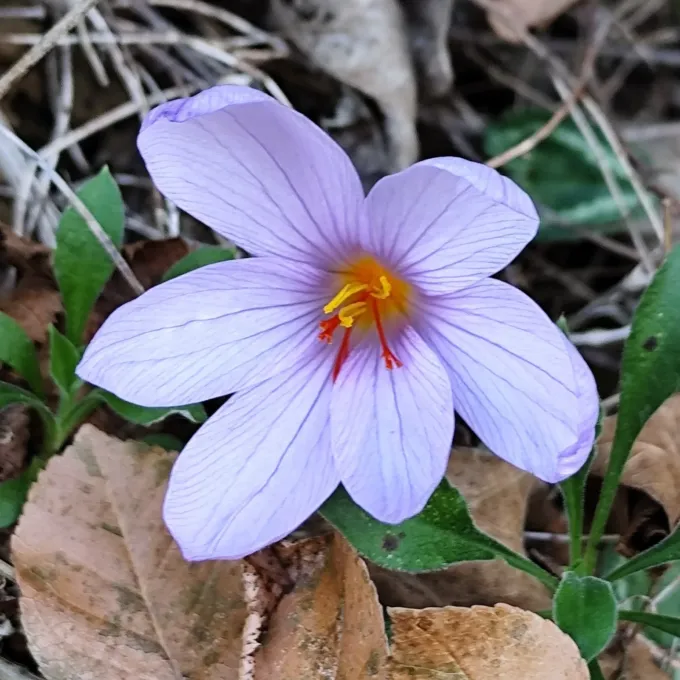
Description
Sowing dates
Planting of long-flowered crocus bulbs should be performed in late summer or early autumn. The optimal window is usually August and September, which allows the bulbs to establish before the soil freezes.
Bulbs must be planted at a depth of approximately three times the height of the bulb. Proper depth is essential for protecting the bulb from temperature fluctuations and ensuring vigorous spring growth.
Spacing between bulbs should range from 5 to 10 centimeters. Adequate spacing helps ensure that each bulb has sufficient access to soil nutrients and encourages proper airflow around the plant base.
In regions with milder climates, planting can occur slightly later in the season. However, timely planting remains critical to avoid the physiological stress that late-planted bulbs often endure during the winter.
After planting, it is highly recommended to apply a layer of mulch. This helps regulate soil temperature, prevents premature sprouting, and minimizes the risk of weed competition in the early stages.
Growing requirements
The long-flowered crocus belongs to the Iridaceae family and is a valued ornamental crop known for its elegant blooms. It is a perennial plant native to the Mediterranean region, notably Italy.
The plant thrives in sunny, open locations with light, well-draining soils. Poor drainage leads to waterlogging, which is a major cause of bulb rot and overall plant failure in this species.
Soil quality should be sandy or loamy with a neutral to slightly acidic pH level. Heavy clay soils require the addition of coarse sand or organic matter to improve aeration and water permeability.
The crop requires moderate climate conditions. While the long-flowered crocus is somewhat hardy, it benefits from protection against harsh, desiccating winds that can damage foliage during the growth phase.
Routine care involves manual weeding to prevent nutrient depletion and regular soil aeration. Maintaining a weed-free environment is vital, especially when the plants are in their active development stage.
Main diseases and pests
The primary threats to this culture are fungal diseases, including fusarium wilt and gray mold. These pathogens are most prevalent in damp conditions or poorly ventilated soil environments.
Bulb rot is a constant concern for commercial growers. Proper post-harvest handling and dry storage conditions are necessary to reduce the incidence of rot before the next planting season.
Pests such as rodents can pose a severe threat, often consuming bulbs during the dormant season. Additionally, soil-dwelling larvae like wireworms can inflict significant damage on the root system.
Nematodes are another major concern, causing stunted growth and leaf distortion. Integrated pest management strategies, including crop rotation and soil sterilization, are recommended for large-scale production.
- Use of disease-free bulbs
- Proper drainage installation
- Regular monitoring for pathogens
- Application of protective fungicides