
Karduchorum saffron
Crocus karduchorum
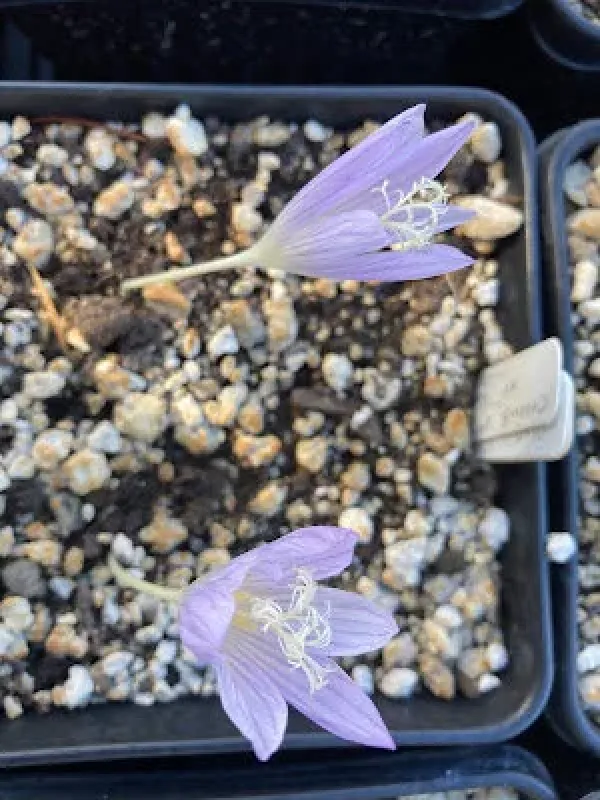
Description
Sowing dates
Crocus karduchorum is a bulbous perennial that follows a strict seasonal cycle. Planting must occur during the summer dormancy period, ensuring the bulbs are placed in the ground while they are inactive and less susceptible to transplant shock.
The ideal planting window is from late summer to early autumn. This timing allows the root system to establish itself in the cooling soil before the arrival of the first winter frosts, ensuring the plant is prepared for its autumn flowering.
Bulbs should be planted at a depth of 7 to 10 centimeters, depending on the soil texture. In lighter, sandier soils, a deeper planting helps maintain stable moisture and protects the bulb from extreme temperature fluctuations.
Spacing is essential for the health of the crop. Planting bulbs roughly 10–15 centimeters apart ensures adequate airflow around the foliage, which is vital to prevent fungal issues that can arise in dense, crowded plantings.
Light watering after planting is beneficial to settle the soil, but excessive moisture must be avoided at all costs during the dormant phase. Proper drainage at the planting site is the most critical factor for successful establishment.
Growing requirements
This species is native to mountainous terrains in Western Asia, which dictates its high requirement for full solar exposure. It thrives in open locations where it can receive maximum sunlight throughout its growing season.
The soil must be exceptionally well-draining. Heavy clays should be amended with grit or sharp sand to prevent water stagnation, which is the primary cause of bulb rot and total crop loss in saffron species.
The plant prefers neutral to slightly alkaline soil conditions. If the soil is naturally acidic, applying agricultural lime can help reach the ideal pH range, promoting better nutrient uptake and bulb health.
It is a drought-tolerant plant during its summer rest period. However, it requires consistent, moderate moisture during the active growth phase, typically in the autumn and early spring, to support foliage development.
In regions with harsh winters, protection from deep soil freezing is recommended. A layer of organic mulch can be applied after the foliage has emerged to insulate the bulb and the emerging shoot from sharp temperature drops.
Main diseases and pests
Fungal pathogens are the most significant threat to Crocus karduchorum. Fusarium and various forms of botrytis thrive in damp, stagnant environments, often resulting in the rapid decay of the bulb and root system.
Pests such as bulb mites and onion flies can cause significant damage by boring into the bulb tissues. Preventive treatment with systemic insecticides or biological control agents can mitigate the impact of these pests.
Small mammals, particularly rodents, are known to consume the nutrient-rich bulbs. Implementing physical barriers, such as wire mesh or metal cages around the planting area, is often the most effective method for protection.
Viruses, often vectored by aphids, can cause streaking of the leaves and stunted growth. Maintaining a clean cultivation site and controlling insect populations are essential practices for preventing the spread of these pathogens.
A rigorous rotation of planting sites is recommended to prevent the buildup of soil-borne diseases. Avoiding planting in the same spot for multiple consecutive years significantly lowers the disease pressure on the crop.
Harvesting
The harvest of the saffron threads occurs exclusively during the flowering window. As the flowers open sequentially, the site must be inspected daily to gather the stigmas at the peak of their quality and color development.
The stigmas must be plucked carefully by hand. This labor-intensive process requires precision to ensure that no debris or petal parts are collected along with the stigmas, which would otherwise degrade the quality of the final product.
Immediate drying is crucial after the harvest. The stigmas should be placed in a warm, dry environment with good airflow, away from direct sunlight, to allow the moisture content to drop without damaging the delicate aromatic oils.
Once dried, the spice should be stored in airtight, opaque glass containers. This prevents light and oxygen from degrading the flavor and color, allowing the saffron to maintain its high market value for several years.
Harvesting bulbs for future propagation is done only once the foliage has completely turned yellow and died back. This stage ensures the bulb has reabsorbed all necessary nutrients for the next dormancy cycle.