
Crocus imperati
Crocus imperati
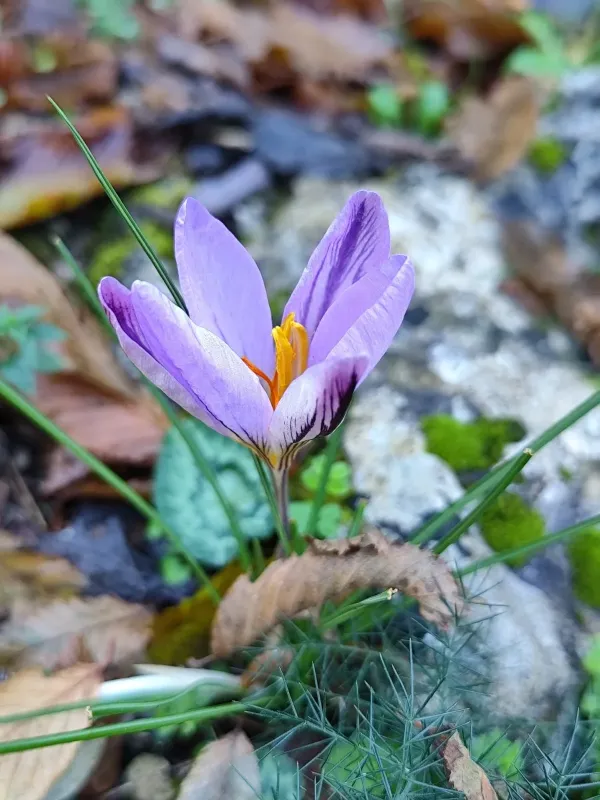
Description
Sowing dates
Crocus imperati is an early-flowering ephemeral plant; therefore, corms should be planted in late August or September before the onset of freezing weather.
The optimal planting time is determined by the dormancy period of the corm, which requires time to establish a robust root system before the ground freezes.
Planting during the spring is generally less effective, as the plants often fail to flower or show reduced vigor in the first season after establishment.
Corms should be planted at a depth of approximately three times the size of the bulb, spacing them about 5–8 centimeters apart to allow for clump formation.
After planting, it is recommended to apply a layer of mulch to stabilize soil temperatures and protect the newly emerging roots from frost damage.
Growing requirements
This species thrives in well-drained, light soils with a neutral or slightly acidic pH, avoiding heavy clay soils prone to waterlogging.
The plant is highly heliophilic and requires open, sunny locations or areas with light shade during the brightest parts of the day.
Crocus imperati is adapted to temperate climates; however, in regions with harsh winters, additional protection with evergreen boughs or leaves is advisable.
A critical management practice is ensuring that the soil remains relatively dry during the summer dormancy to prevent rot in the dormant corms.
Application of phosphorus and potassium-rich fertilizers is beneficial for promoting vibrant floral displays and the development of healthy daughter corms.
Main diseases and pests
Major phytopathological threats include gray mold (Botrytis) and Penicillium rot, which typically occur under conditions of excessive moisture and poor drainage.
Rodents, particularly voles, are significant pests that often consume the corms; the use of wire mesh baskets is recommended for protection.
Viral infections may appear as variegated patterns on petals or stunted growth, requiring the immediate removal of affected plants to prevent further spread.
Soil-dwelling larvae, such as wireworms, can damage the basal plate of the corm, leading to physiological stress and eventual plant collapse.
- Fungicidal treatment of corms before planting.
- Maintaining crop rotation in ornamental beds.
- Removing and destroying infected plant tissue.
Harvesting
Harvesting of daughter corms should be performed once the foliage has completely turned yellow and withered, indicating the end of the growth cycle.
Once lifted, corms must be dried in a well-ventilated, shaded area at temperatures around 20–25 degrees Celsius to cure properly.
After cleaning off excess soil and dead scales, the bulbs should be graded by size and inspected for any signs of physical damage or disease.
Storage should take place in a cool, dry, and dark environment until the fall planting season to ensure maximum viability of the stock.
Periodic lifting every 3–4 years is necessary to prevent overcrowding of corm clusters, which helps maintain large flower size and plant vigor.