
Crocus cvijicii
Crocus cvijicii
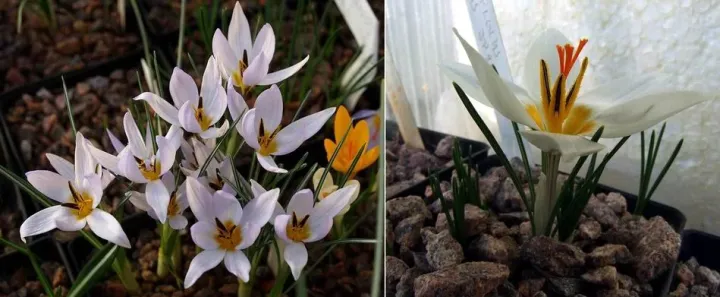
Description
Growing requirements
Crocus cvijicii is a perennial cormous plant belonging to the Iridaceae family. Originating from the mountainous regions of the Balkan Peninsula, it is highly valued for its natural beauty in rock gardens and alpine landscape designs.
This species thrives in well-drained, gritty soils that mimic its native rocky habitat. It requires full sun exposure to initiate healthy blooming, as shaded areas can lead to weak growth and susceptibility to various physiological disorders.
In terms of climate, the plant is remarkably hardy, evolved to survive harsh winters and fluctuating spring temperatures. The soil should remain moist during the active growth phase in spring but must dry out significantly during the summer dormancy period.
Proper aeration is essential for the corms; therefore, planting in raised beds or areas with excellent natural drainage is strongly recommended. Heavy soils should be amended with organic matter or sand to prevent water stagnation around the base.
As an ornamental crop, it requires minimal human intervention once established. Its ability to bloom early in the season makes it a significant species for collectors and enthusiasts of rare spring-flowering flora.
Main diseases and pests
The most common biological threats to Crocus cvijicii include various fungal pathogens such as Fusarium and Botrytis. These diseases typically manifest as rot on the corms when the soil moisture remains too high for an extended period.
Soil-borne pests like wireworms present a direct threat to the root system and the developing corm. Infestations can weaken the plant, significantly reducing its vigor and leading to secondary infections from bacterial or fungal sources.
Small mammals, including voles and field mice, are significant pests that often feed on dormant bulbs. Installing protective metal mesh baskets at the time of planting is a reliable way to secure the collection from these nocturnal foragers.
Slugs and snails can cause cosmetic damage by consuming the foliage and floral parts during the spring. Implementing mechanical barriers like gravel mulch or copper tape can mitigate these risks without the use of harsh chemicals.
Good agricultural practices, such as ensuring proper spacing between plants and avoiding waterlogged spots, remain the primary defense against most diseases and pests associated with this species in cultivation.