
Crocus cartwrightianus
Crocus cartwrightianus
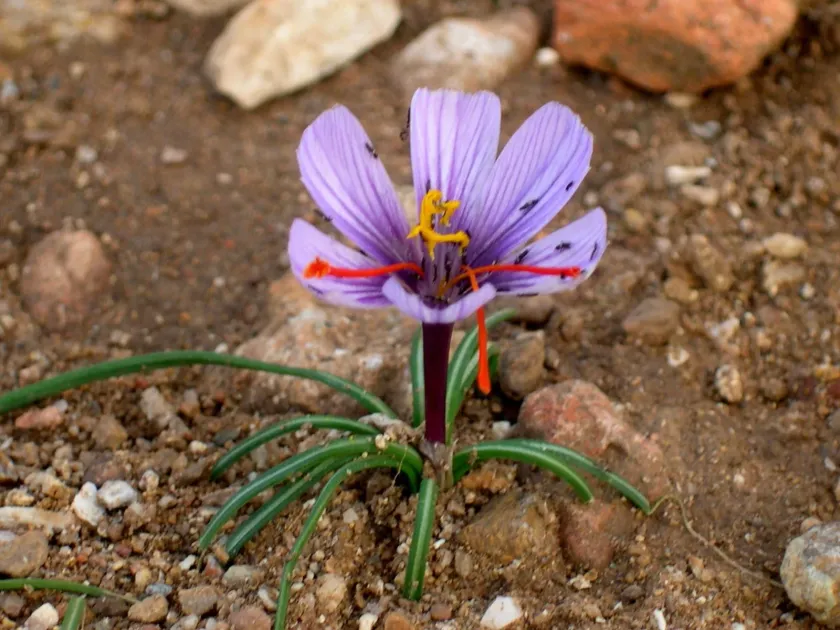
Description
Sowing dates
Crocus cartwrightianus is a perennial cormous plant belonging to the Iridaceae family. Native to Greece and the Aegean islands, it is widely recognized as the wild ancestor of the domesticated saffron crocus (Crocus sativus).
Planting of the corms typically occurs in late summer, shortly before the onset of the autumn rainy season. This timing allows the roots to establish before the plant enters its active flowering stage in the autumn months.
Corms should be planted at a depth of approximately 8–10 cm in well-aerated soil. Proper spacing is essential, with 5–10 cm between plants to allow for sufficient airflow and space for the development of new cormlets.
Vegetative propagation via cormlets is the standard method for increasing planting stocks. While seeds can be produced, they are rarely used for commercial cultivation due to the long duration required for the plants to reach flowering maturity.
The life cycle of this plant is characterized by a dormant phase during the hot, dry summer, followed by the emergence of foliage and flowers in the autumn. Understanding this cycle is vital for successful cultivation.
Growing requirements
This species thrives in sunny locations with excellent drainage. It is highly sensitive to moisture; waterlogged soil can lead to rapid corm decay and the development of fungal pathogens.
The soil should be light, sandy, or loamy, preferably with a neutral to slightly alkaline pH. In regions with heavy, clay-rich soils, the addition of grit or coarse sand is necessary to improve drainage conditions.
Crocus cartwrightianus is well-adapted to a Mediterranean climate. While it can withstand mild frost, extreme cold and prolonged exposure to freezing temperatures may require protection using mulch or cloches.
Watering should be managed carefully: regular hydration is required during the active growth period, but the soil must be allowed to dry out significantly during the summer dormant season to mimic its natural environment.
Low-nitrogen, high-potassium fertilizers are recommended to support corm health and flowering potential. Over-fertilization, especially with nitrogen, can encourage excessive foliage growth at the expense of floral development.
Main diseases and pests
Rodents such as mice and voles are significant pests for this crop, as they are attracted to the starch-rich corms buried in the ground. Protective fencing or mesh barriers are often required to safeguard the bulbs.
Fungal diseases, including Fusarium wilt and Botrytis, pose a serious risk, particularly in high-humidity conditions. These pathogens can spread quickly if soil drainage is inadequate or if the planting site is poorly ventilated.
Viral infections can cause mottled leaves and deformed flowers, severely reducing the vitality of the plants. Since these viruses are often transmitted by aphids, controlling insect populations is a key management strategy.
Bulb mites can also infest the corms, leading to stunted growth and eventual death of the plant. Using certified healthy planting stock and practicing crop rotation are effective preventive measures.
Environmental stress, such as unseasonal summer rains, can disrupt the dormant phase and trigger premature growth, leaving the plants vulnerable to subsequent cold snaps or disease. Proper site selection is the best defense against such occurrences.
Harvesting
Harvesting Crocus cartwrightianus is a delicate, labor-intensive process. The main product is the red stigmas found within the flower, which must be collected during the early morning hours before the blooms fully open.
Once gathered, the stigmas should be processed immediately. Drying is the most critical step; it must be done in a shaded, well-ventilated area to preserve the chemical compounds that provide its aroma and color.
The yield of stigmas is relatively low per flower, which necessitates large-scale planting to make production economically viable. Manual harvesting is the only feasible method, as the flowers are too fragile for mechanical equipment.
After the harvest, the foliage must be left intact until it turns yellow and dies back naturally. This period is crucial for the plant to store carbohydrates in the corm for the following year's growth.
Regular maintenance of the beds, including weeding and preventing overcrowding of corms, is essential to ensure consistent yields over multiple years. Older plantings often benefit from division to maintain flower size.