
Cambessedes' Crocus
Crocus cambessedesii
Description
Growing requirements
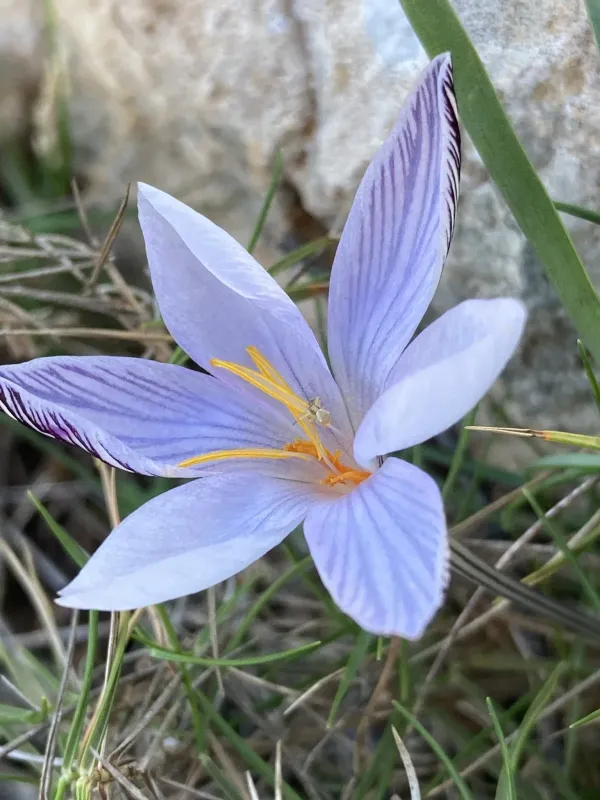
Cambessedes' Crocus (Crocus cambessedesii) is a unique perennial bulbous plant belonging to the Iridaceae family. Native to the Balearic Islands, this species is highly specialized for Mediterranean environmental conditions.
Botanically, it is characterized by its slender foliage and attractive blooms, which typically appear in late winter or early spring. Its evolutionary history has made it well-adapted to rocky habitats with thin, well-draining soils.
To cultivate this plant successfully, one must replicate its natural stony soil environment. A gritty, neutral-to-alkaline substrate with excellent drainage is crucial to prevent the bulbs from decaying during the dormant season.
The species requires full sun to partial shade, depending on the intensity of the climate. It thrives in conditions that mimic dry, Mediterranean summers, allowing the corms to ripen properly after the flowering phase.
Economically and horticulturally, it serves as a niche plant for rock gardens and botanical collections. Due to its limited distribution and sensitivity, it is not a large-scale agricultural crop but rather a specialty ornamental.
Main diseases and pests
The primary threats to Crocus cambessedesii include fungal pathogens such as Fusarium and various types of basal rot, which are often exacerbated by poor drainage and excessive moisture.
Pests such as bulb mites are significant threats to the underground corms, as they can weaken the plant and facilitate secondary infections from opportunistic fungi.
Small mammals and rodents are frequently cited as a risk, as they may consume the energy-rich bulbs if they are not protected by wire mesh or proper screening during storage or planting.
Botrytis, commonly known as gray mold, can affect the foliage during periods of cool, damp weather, necessitating a controlled environment to ensure adequate ventilation.
Implementing a strict hygiene routine, including the removal of infected plant debris and the use of preventative systemic fungicides, is recommended for maintaining a healthy collection.