
Bory's crocus
Crocus boryi
Description
Growing requirements
Bory's crocus (Crocus boryi) is a perennial bulbous plant belonging to the Iridaceae family. Native to the Greek islands, it is adapted to harsh, rocky environments where drainage is excellent and nutrient availability is limited by nature.
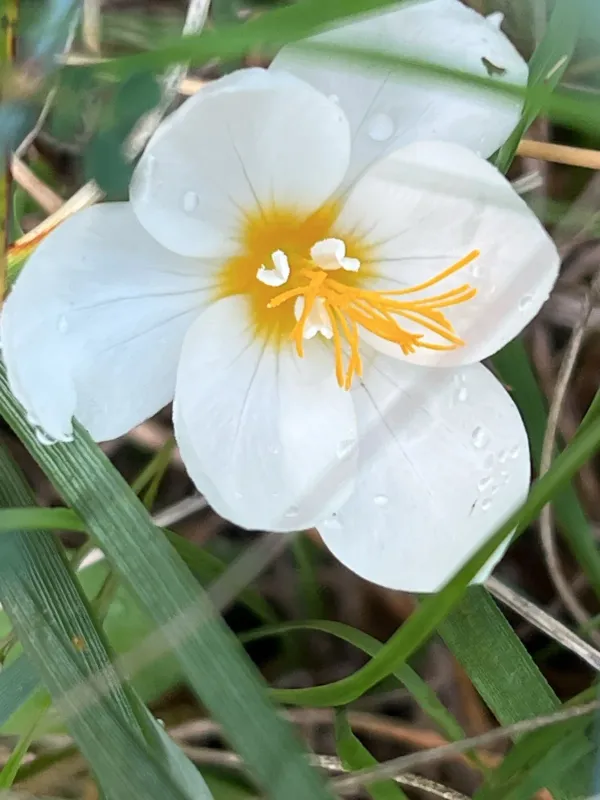
Botanically, this species is defined by its small corm and delicate, white-to-pale-lilac flowers that emerge in late autumn. The foliage usually develops alongside the flowers, creating a distinct aesthetic that distinguishes it from spring-blooming varieties.
Agronomic success with Crocus boryi relies heavily on mimicking its natural Mediterranean habitat. The soil must be gritty, well-draining, and slightly alkaline, as stagnant moisture is the primary cause of plant failure during the dormant summer phase.
It performs best in full sun, where the corms can experience the necessary heat cycle to trigger autumn flowering. When cultivated in containers or gardens, placing the plant in a position that avoids winter saturation is essential for survival.
The ornamental use of this crop is primarily focused on rock gardens and specialized alpine collections. Due to its specific flowering period, it provides color when most garden plants have already completed their cycle, making it a valuable asset for horticulturists.
Main diseases and pests
The most common pathologies affecting this plant include fungal issues, specifically Fusarium and Botrytis, which are invariably linked to high soil moisture levels. Ensuring the corms remain dry during the summer resting period is the most effective biological control.
Pests such as voles and moles can destroy populations by feeding on the corms. Growers often utilize wire mesh baskets during planting to provide a physical barrier against these threats, ensuring the long-term viability of the bulbous collection.