
Balansa's crocus
Crocus balansae
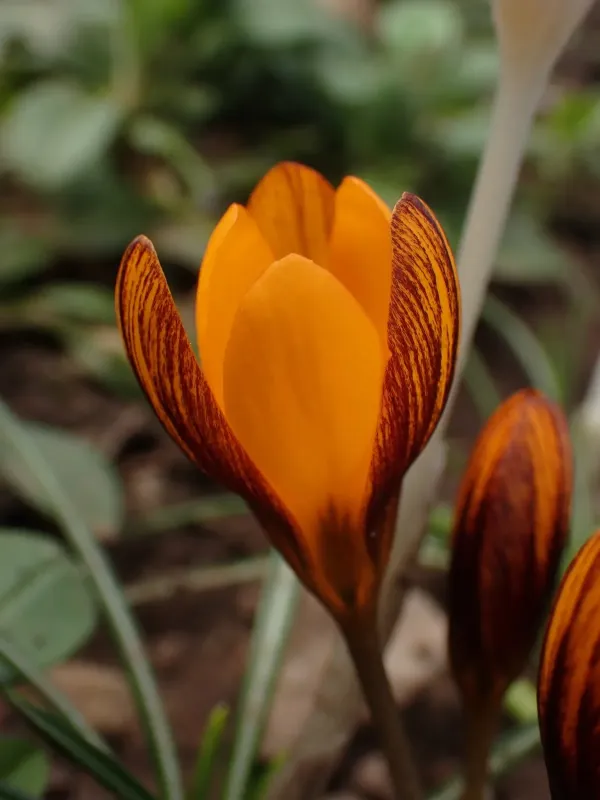
Description
Sowing dates
Planting of Balansa's crocus bulbs in open ground is mainly carried out in autumn, approximately from mid-September to the end of October. It is important to plant the bulbs before the onset of persistent frosts so that they can successfully take root.
The planting depth depends directly on the bulb size and soil structure; typically, it ranges from 5 to 10 centimeters. In heavy clay soils, it is recommended to plant them slightly shallower while ensuring a high-quality drainage layer in the planting hole.
The optimal distance between individual bulbs for mass planting is about 8–10 centimeters. This density allows plants to develop fully without competing for nutrients and moisture during the first few years after planting.
When multiplication or transplantation is necessary, crocus clumps should be dug up after the aerial part of the plant has completely withered. After drying and cleaning, the bulbs should be stored in a cool, dry, and well-ventilated place until the autumn planting time.
In regions with harsh winters, additional mulching with a layer of peat, dry leaves, or humus is recommended. This protects young shoots from sharp temperature fluctuations in early spring and prevents soil freezing at the depth of the bulbs.
Growing requirements
Balansa's crocus belongs to the Iridaceae family and is an elegant spring ephemeral. This low-growing perennial plant naturally inhabits the rocky slopes of Turkey, preferring sunny and open locations for optimal growth.
The crop has high requirements for soil drainage quality, as waterlogging is destructive to bulbous plants. Loose, fertile sandy loam or loamy soils with a neutral or slightly acidic reaction are ideal for successful cultivation.
For active blooming, the plant requires plenty of sunlight during the spring season. Although crocuses can tolerate light shade, in dense shadows, the aesthetic quality of the flowers decreases, and the bulbs gradually become smaller and may stop forming buds.
Agronomic practices include moderate watering during the active growing season if the spring is dry. After flowering and leaf yellowing, watering should be stopped completely, as the plant enters a biological dormancy period and the bulbs require dry conditions.
Fertilization of crocuses is carried out at the beginning of the growing season using complex mineral fertilizers with low nitrogen content. An excess of nitrogen fertilizers provokes excessive green mass growth, which can lead to fungal infections and rot.
Main diseases and pests
The main threat to crocuses is various types of rot that develop when water management is neglected. Fusarium wilt and gray mold are the most common infections that appear due to excessive soil moisture during the dormancy period or in spring.
Pests such as rodents (voles) can cause significant damage to plantations by eating the succulent bulbs. For protection, it is recommended to plant bulbs in special mesh baskets or use effective repellent agents.
Aphids and thrips can attack the aerial part of the plant during the flowering period, sucking sap from leaves and buds. In case of massive infestation, modern systemic insecticides should be applied, strictly adhering to dosage and application frequency.
Wireworm larvae are also dangerous to the basal plate of the bulbs, as they create tunnels through which pathogenic fungi and bacteria enter the plant. Prevention involves deep soil cultivation and the application of specialized granular pesticides before planting.
Viral diseases, manifesting as spotting or petal deformation, are incurable. Affected specimens must be immediately removed from the site along with the soil ball and destroyed to prevent the spread of infection to healthy plants.