
Babiana rubrocyanea
Babiana rubrocyanea
Description
Sowing dates
Babiana rubrocyanea, belonging to the Iridaceae family, is a bulbous perennial originating from the Cape region of South Africa. In agricultural and horticultural practices, bulbs are typically planted in early spring once soil temperatures reach a stable 10–12 degrees Celsius.
Proper planting depth is essential for healthy development, usually ranging between 5 and 8 centimeters below the soil surface. Spacing between individual plants should be maintained at 10 to 15 centimeters to allow for optimal airflow and prevent overcrowding.
In regions with cold winters, bulbs must be lifted after the foliage dies back in late summer. They should be cleaned, dried, and stored in a cool, dry environment at temperatures around 5–8 degrees Celsius until the next planting season.
Propagation is primarily achieved through offsets or daughter corms produced by the parent bulb. This method ensures that the genetic traits and floral characteristics remain consistent across generations.
Seed propagation is possible but is a significantly longer process, often taking several years for the resulting plants to reach a size suitable for flowering. It is primarily used in controlled breeding programs.
Growing requirements
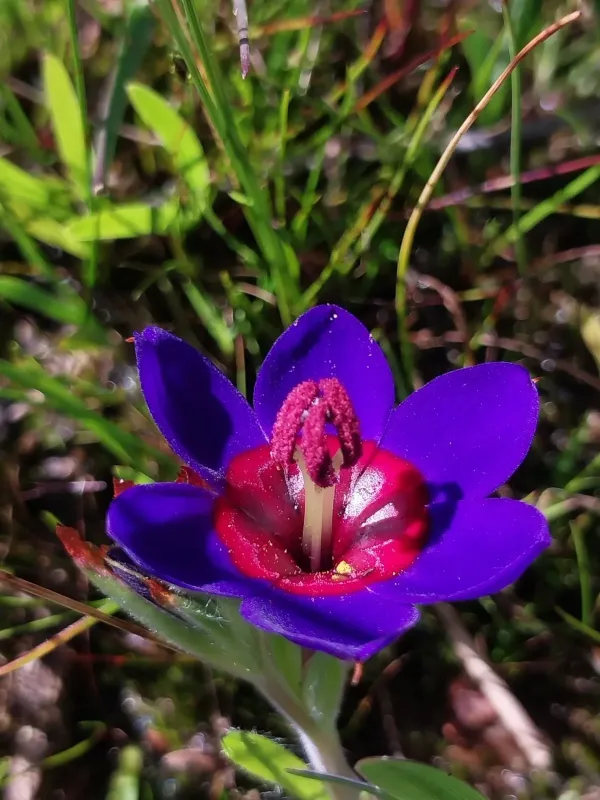
This species is highly heliophilic, requiring full sun exposure to flourish. Insufficient sunlight leads to etiolation, weak flower stems, and a significant decrease in the vividness of the characteristic red and blue flower markings.
The ideal soil substrate for Babiana rubrocyanea is light, well-draining, and slightly acidic. Heavy soils that retain moisture must be amended with sand or organic grit to prevent root rot, which is a major limiting factor for this crop.
Water management is critical: plants need regular moisture during the active growth period, particularly as buds begin to form. Once flowering ceases and the leaves yellow, irrigation should be strictly reduced to induce dormancy.
The crop is sensitive to stagnant air and high humidity levels. Good ventilation is required, especially in greenhouse or garden conditions where the plants are grown in concentrated clusters.
Providing a consistent supply of nutrients, preferably a balanced liquid fertilizer during the early vegetative stage, will support robust root development and improve overall plant resilience against environmental stress.
Main diseases and pests
The most common biological threats to Babiana rubrocyanea are fungal pathogens such as Fusarium and Botrytis, which target the corms during periods of excessive soil moisture and poor drainage.
Pests such as thrips, aphids, and spider mites often infest the foliage, particularly during dry, warm spells. These pests deplete plant resources by feeding on sap, often leading to chlorosis and stunted growth of the floral display.
Proactive management includes the application of systemic fungicides to the bulbs prior to planting. This creates a protective barrier against soil-borne pathogens during the critical initial weeks of the growing cycle.
If an infestation occurs, specialized acaricides or insecticides should be applied during the cooler parts of the day to avoid leaf scorch and ensure maximum efficacy of the chemical treatment.
Cultural practices such as crop rotation and the removal of plant debris help break the life cycle of common pests. Maintaining high standards of hygiene in the growing area is essential for preventing the rapid spread of infections.