
Notocactus schlosseri
Notocactus schlosseri
Description
Growing requirements
Notocactus schlosseri is an attractive succulent species belonging to the Cactaceae family. Native to the rocky landscapes of Brazil, this plant has adapted to survive in environments with poor soil and limited water availability, making it a robust choice for collectors.
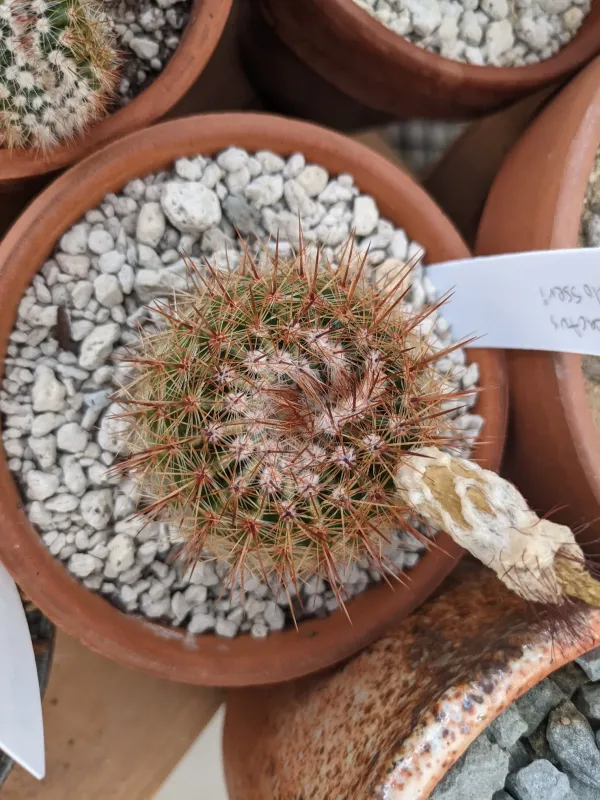
Botanically, the plant is characterized by a spherical or slightly cylindrical body with numerous ribs covered in dense, needle-like spines. The striking yellow-orange flowers emerge from the crown of the plant, typically appearing in the late spring or early summer months.
For successful growth, it requires a highly porous and well-draining substrate. A mix consisting of standard cactus soil amended with perlite, coarse sand, and small pumice rocks provides the necessary aeration for healthy root development.
Regarding climatic requirements, this species thrives in bright, direct sunlight. Placing the plant in a south-facing window or a greenhouse environment ensures that the plant retains its compact shape and produces more vibrant flowers.
During the dormant winter phase, the plant requires a cool environment with temperatures between 5 and 10 degrees Celsius. Maintaining low temperatures during this period is essential to induce flowering during the following growing season.
Main diseases and pests
The most common threat to this species is overwatering, which leads to root rot and base decay. Since the roots are sensitive to stagnant moisture, ensuring a dry period between waterings is the best prevention strategy for overall health.
Pest issues often include spider mites, which thrive in low-humidity indoor environments. These pests damage the skin of the cactus, causing unsightly yellowing or scarring. Regular monitoring and misting can help deter their appearance.
Mealybugs are another frequent nuisance, often found tucked into the woolly areoles or between the ribs. Manual removal with a cotton swab dipped in isopropyl alcohol is an effective control method for minor infestations.
Fungal pathogens can also pose a risk if the plant is kept in an area with poor airflow. Good ventilation is crucial, especially during the summer, to allow excess surface moisture to evaporate quickly after watering.
Proper hygiene is vital for maintenance; removing dead leaves and keeping the surface of the soil clean prevents the accumulation of debris that can harbor harmful pathogens. Always use clean tools to avoid cross-contamination.